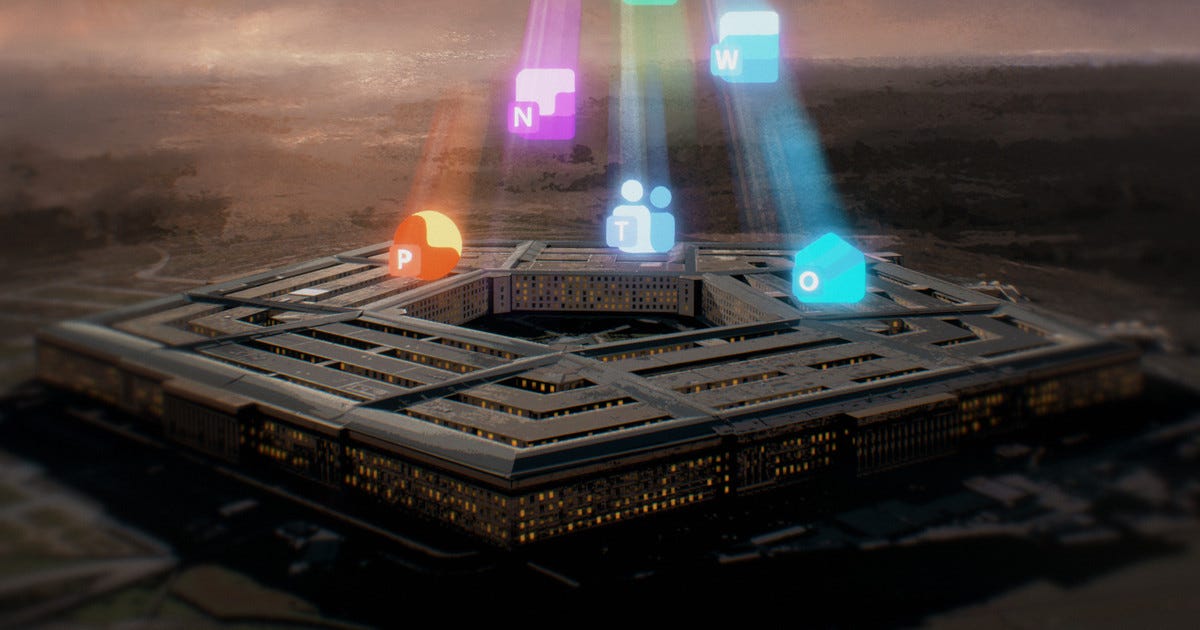
Anticompetitive behavior? The EU claimed Microsoft illegally linked its chat app Teams to other Office products, limiting competitors like Slack. If guilty, Microsoft could face a fine of up to 10% of its annual revenues. /EC.EUROPA.EU/
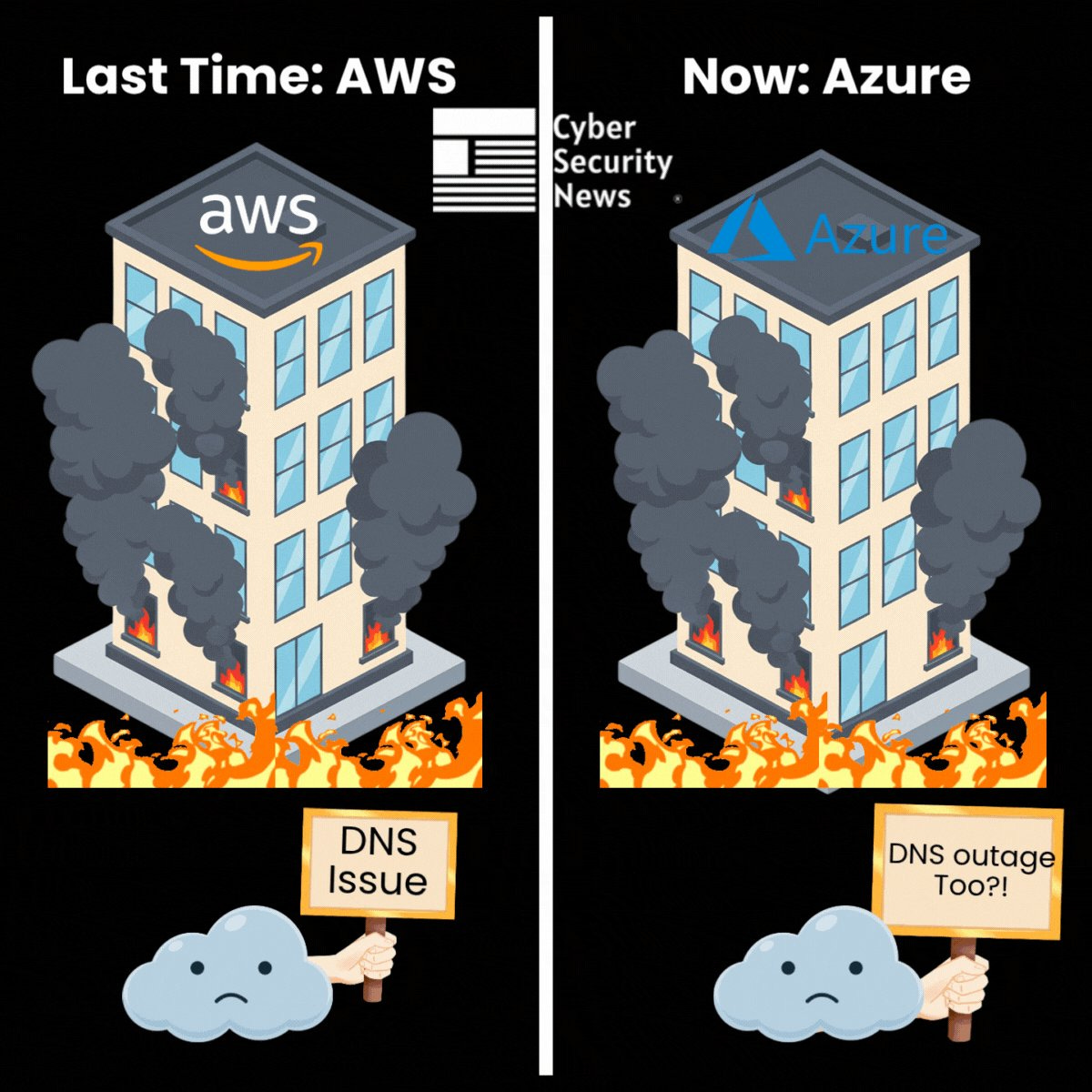
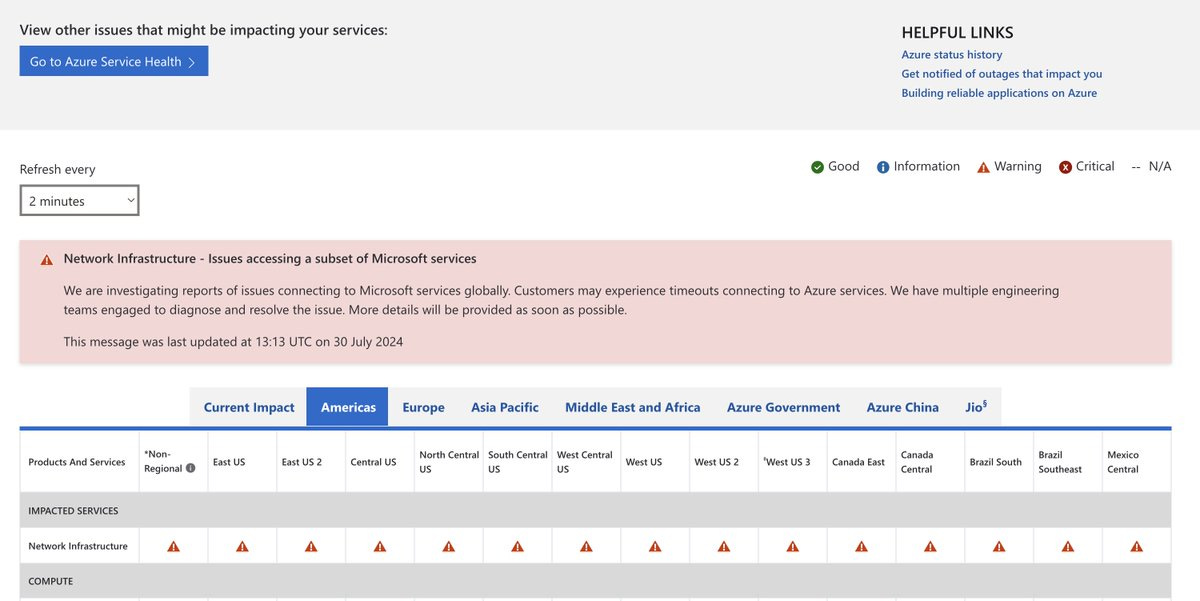
@The_Cyber_News: Yesterday, Microsoft Azure experienced a major global outage that disrupted many users and services.
This incident followed a similar outage at Amazon Web Services (AWS).
The downtime affected businesses that rely on Azure, causing interruptions in various applications. As a result, users expressed concerns about the reliability of cloud services. #cybersecuritynews
+ Related content:
azure.status.microsoft (10/29/25): [Excerpt] Preliminary Post Incident Review (PIR) - Azure Front Door - Connectivity issues across multiple regions.
Tracking ID: YKYN-BWZ
This is our Preliminary PIR to share what we know so far. After our internal retrospective is completed (generally within 14 days) we will publish a Final PIR with additional details.
What happened?
Between 15:45 UTC on 29 October and 00:05 UTC on 30 October 2025, customers and Microsoft services leveraging Azure Front Door (AFD) may have experienced latencies, timeouts, and errors.
Affected Azure services include, but are not limited to: App Service, Azure Active Directory B2C, Azure Communication Services, Azure Databricks, Azure Healthcare APIs, Azure Maps, Azure Portal, Azure SQL Database, Azure Virtual Desktop, Container Registry, Media Services, Microsoft Copilot for Security, Microsoft Defender External Attack Surface Management, Microsoft Entra ID (Mobility Management Policy Service, Identity & Access Management, and User Management UX), Microsoft Purview, Microsoft Sentinel (Threat Intelligence), and Video Indexer.
Customer configuration changes to AFD remain temporarily blocked. We will notify customers once this block has been lifted. While error rates and latency are back to pre-incident levels, a small number of customers may still be seeing issues and we are still working to mitigate this long tail. Updates will be provided directly via Azure Service Health.
What went wrong and why?
An inadvertent tenant configuration change within Azure Front Door (AFD) triggered a widespread service disruption affecting both Microsoft services and customer applications dependent on AFD for global content delivery. The change introduced an invalid or inconsistent configuration state that caused a significant number of AFD nodes to fail to load properly, leading to increased latencies, timeouts, and connection errors for downstream services.
As unhealthy nodes dropped out of the global pool, traffic distribution across healthy nodes became imbalanced, amplifying the impact and causing intermittent availability even for regions that were partially healthy. We immediately blocked all further configuration changes to prevent additional propagation of the faulty state and began deploying a ‘last known good’ configuration across the global fleet. Recovery required reloading configurations across a large number of nodes and rebalancing traffic gradually to avoid overload conditions as nodes returned to service. This deliberate, phased recovery was necessary to stabilize the system while restoring scale and ensuring no recurrence of the issue.
The trigger was traced to a faulty tenant configuration deployment process. Our protection mechanisms, to validate and block any erroneous deployments, failed due to a software defect which allowed the deployment to bypass safety validations. Safeguards have since been reviewed and additional validation and rollback controls have been immediately implemented to prevent similar issues in the future.
🙂
☑️ #172 Oct 30, 2025
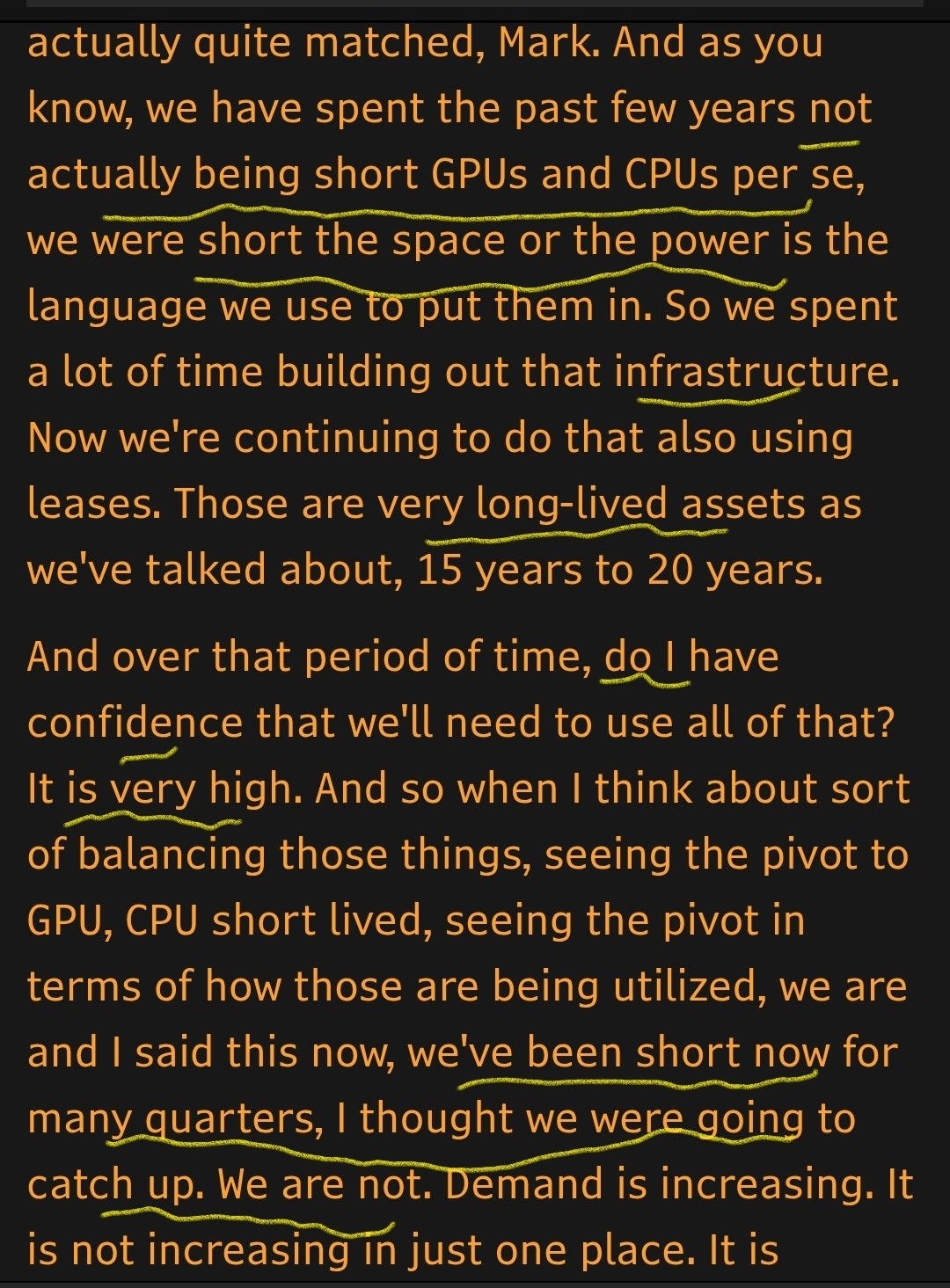
“We’ve been short [power and infrastructure] for many quarters. I thought we were going to catch up. We are not. Demand is increasing.”
@matthew_sigel: “We’ve been short [power and infrastructure] for many quarters. I thought we were going to catch up. We are not. Demand is increasing.” - MSFT CFO Amy Hood addressing analyst question on overbuilding.
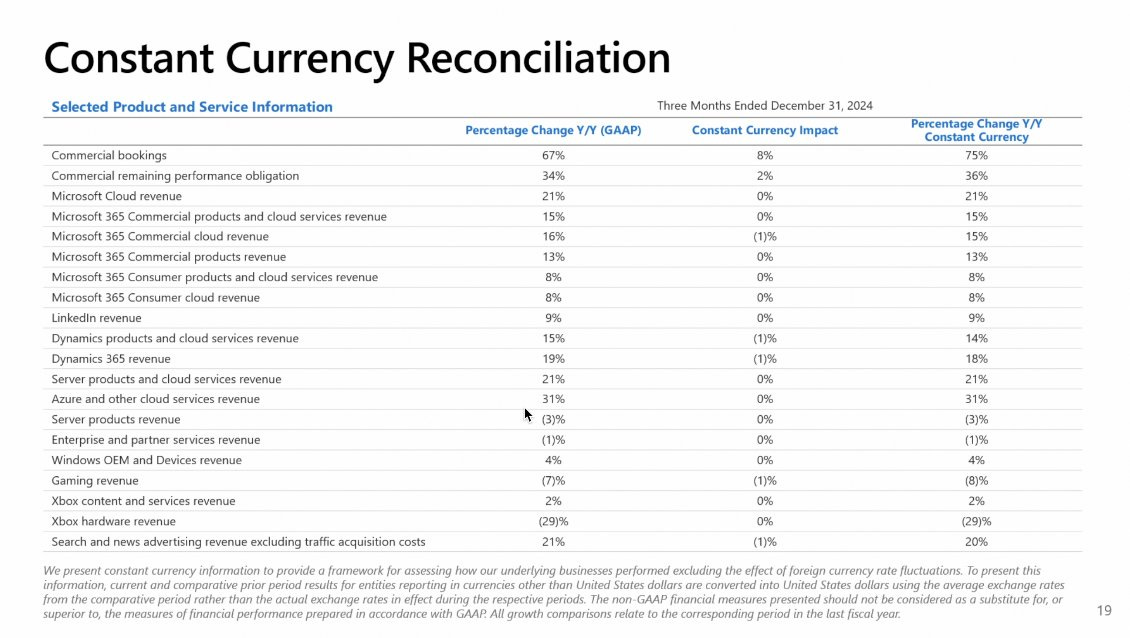
Revenue was $77.7 billion and increased 18% (up 17% in constant currency)
Operating income was $38.0 billion and increased 24% (up 22% in constant currency)
Net income, on a GAAP basis, was $27.7 billion and increased 12%, and on a non-GAAP basis was $30.8 billion and increased 22% (up 21% in constant currency)
Diluted earnings per share, on a GAAP basis, was $3.72 and increased 13%, and on a non-GAAP basis was $4.13 and increased 23% (up 21% in constant currency)
Sustainable and adaptive Scake Data Centers and Builld-to-Scale solutions for global hyperscale, AI/HPC, and enterprise customers
aligneddc.com: [Excerpt] AIP was founded by BlackRock, Global Infrastructure Partners (GIP), a part of BlackRock, MGX, Microsoft, and NVIDIA to expand capacity of AI infrastructure and help shape the future of AI-driven economic growth. Its financial anchor investors include the Kuwait Investment Authority and Temasek.
In less than a decade, Aligned has evolved into one of the largest and fastest growing data center companies globally. The Company designs, builds, and operates cutting-edge data campuses and data centers for the world’s premier hyperscalers, neocloud, and enterprise innovators. Aligned’s portfolio includes 50 campuses and more than 5 gigawatts of operational and planned capacity, including assets under development, primarily located in key Tier I digital gateway regions across the U.S. and Latin America including Northern Virginia, Chicago, Dallas, Ohio, Phoenix, Salt Lake City, Sao Paulo (Brazil), Queretaro (Mexico), and Santiago (Chile).
Microsoft — Next‑Gen Zero‑Water Cooling Data Centers
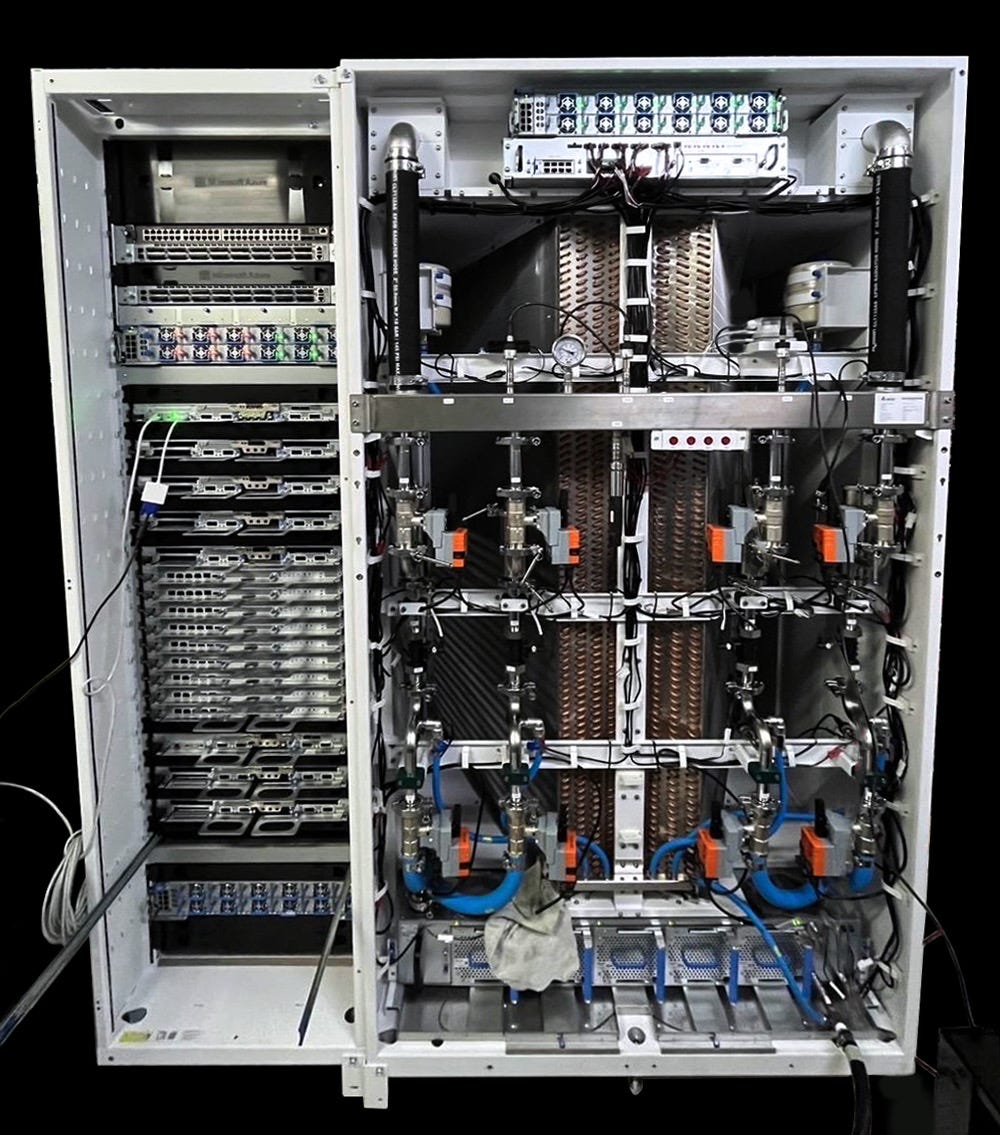
Beginning in August 2024, Microsoft is designing data centers optimized for AI with zero‑water evaporation cooling, using chip‑level closed‑loop liquid cooling. (Microsoft)
High Density / AI Workload Optimization
New cooling tech aimed at chip‑level cooling so that cooling is more precise and better matches heat load; operating temp ranges broadened; more use of outside air / mechanical cooling when possible.
Expected overall slight nominal increase in energy usage compared to previous generation evaporative systems, but offset by reducing water use dramatically; PUE remains competitive (~1.12) in design; cooling overhead lower with liquid cooling.
Average WUE (water usage effectiveness) across fleet: 0.30 L/kWh in 2023, a 39% improvement since 2021.
New data centers like Phoenix, AZ, and Mt. Pleasant, WI are pilot sites, with full deployment of new design from 2026. (Datacenter Dynamics)
Microsoft — Reclaimed Water & Indirect Evaporative Cooling
Microsoft is building sites where cooling uses reclaimed water, indirect evaporative cooling, and zero fresh water for cooling in some designs.
For example, San Jose facility in California will use these methods. (Microsoft Azure)
Microsoft — San Jose, CA / Chile / New Generation Facilities
New facilities designed with more efficient cooling, reclaimed water use, indirect evaporative cooling, zero fresh water in cooling where possible. (Microsoft Azure)
Design PUE ~1.12; WUE (freshwater) ranging down to zero in facilities using reclaimed water: 0.00 L/kWh (i.e. zero fresh water for cooling) when using reclaimed water only. (Microsoft Azure)
PUE target/design: ~1.12 for new generation datacenters (including one under construction in Chile).

PUE levels: many of these new build‑to‑scale / hyperscale campuses target

PUE around 1.08‑1.12. This seems to be near state‑of‑the‑art for large facilities with good cooling, power infrastructure, and scale.
WUE (Water Usage Effectiveness / water intensity): Microsoft has achieved ~0.30 L/kWh fleet average in 2023, with designs aiming for near‑zero (especially zero fresh water or zero evaporation in cooling).

Meta is around 0.18 in recent builds.
🙂
☑️ #170 Oct 15, 2025
A comprehensive snapshot of Microsoft’s Recent developments
chat.openai.com (chatgpt) and phind.com (Phind-70B): [Sources not verified. Do your own research]:
Major Recent Developments
Acquisition of Activision Blizzard (Pending) : Microsoft’s proposed $69 billion acquisition of Activision Blizzard has been one of the most high-profile deals in recent tech history.
The deal is aimed at bolstering Microsoft’s gaming division, particularly its Xbox platform, and expanding its presence in mobile gaming. Regulatory approval from global authorities, including the U.S. FTC and European Commission, has been a key hurdle, but the acquisition is expected to close soon, reshaping the gaming industry landscape.
Following the pending Activision Blizzard acquisition, Microsoft has strengthened its position in the gaming sector by forming alliances with game studios and platform holders. It has also collaborated with companies like Nvidia and Epic Games to enhance cloud gaming capabilities, including Xbox Cloud Gaming and Game Pass services.
AI, Cloud, Azure
AI-powered
Microsoft has made substantial investments in artificial intelligence (AI), particularly by deepening its collaboration with OpenAI. The integration of GPT-4 and other AI models into its suite of products (Word, Excel, PowerPoint) under the “Copilot” branding is a significant move to enhance productivity tools with AI-powered assistance.
The Copilot integration allows users to access generative AI for tasks like drafting text, analyzing data, creating presentations, and summarizing documents. This is part of Microsoft’s broader strategy to enhance user productivity and transform office work into a more AI-assisted experience.
Copilot available in Microsoft Dynamics 365 Guides combining AI with mixed reality.
Azure
Microsoft Azure continues to lead in the cloud AI space with services like Azure OpenAI Service, which allows customers to integrate advanced AI models into their applications.
Microsoft has increasingly pivoted towards cloud computing and subscription-based business models.
This includes a heavy reliance on its Microsoft 365 suite (formerly Office 365) and its Azure cloud platform.
Microsoft Azure continues to form strong partnerships with large enterprises across sectors, such as healthcare, retail, and finance. Notably, Microsoft has teamed up with companies like Coca-Cola KO 0.00%↑ , Walgreens, and Volkswagen to provide cloud infrastructure, AI, and data analytics solutions.
Microsoft has long-standing partnerships with governments and defense agencies worldwide. The company’s Microsoft Azure Government service caters to the unique needs of governmental and defense organizations, particularly in terms of compliance, security, and operational efficiency.
- Integration of Microsoft Teams and Xbox Cloud Gaming into Meta’s Quest VR devices.
- Enhanced virtual workspace capabilities.
Nscale partnership
Today, Microsoft is announcing a $30 billion investment we will make in AI infrastructure and ongoing operations across the United Kingdom during the four years from 2025 through 2028. This marks the largest financial commitment we’ve ever made in the UK. It includes $15 billion in capital expenditures to build out the UK’s cloud and AI infrastructure. This investment will enable us to build the country’s largest supercomputer — with more than 23,000 NVIDIA GPUs — in partnership with Nscale. (microsoft)
Quantum
Microsoft is proud to announce the opening of a new quantum research center at the University of Maryland’s Discovery District. This lab is the result of a deep collaboration between Microsoft, the University of Maryland Enterprise Corporation (UMEC), and the State of Maryland. Microsoft will bring our advanced quantum capabilities to this new center, and with it, create a powerful opportunity to unite state and federal leadership on quantum in the DC capital region. (microsoft)
Today, Microsoft announced its Quantum Safe Program Strategy—a significant step in preparing for the quantum computing era with a security-first mindset. Microsoft’s strategy outlines how we aim to enable early adoption of quantum-safe capabilities in our products and services by 2029 and fully transition by 2033—two years ahead of most governments’ transition completion timelines. (microsoft)
Some product innovations
Windows 11, which was released in late 2021, continues to receive new features and improvements. Recent updates have focused on enhancing user interface design, security, and integration with cloud services. Microsoft also introduced features like Windows Subsystem for Linux (WSL), aimed at developers who want to work with Linux tools on Windows.
Microsoft’s Surface line of products, including the Surface Pro 9, Surface Laptop 5, and Surface Duo, remain central to the company’s hardware business. The Surface Duo 2, a foldable device, positions Microsoft in the rapidly evolving mobile hardware market. Additionally, Microsoft has focused on making Surface devices more adaptable for hybrid work environments.
Xbox Game Pass continues to be a cornerstone of Microsoft’s gaming strategy, with over 25 million subscribers as of 2023. The service offers access to a vast library of games for a monthly subscription fee, including new releases on day one. Innovations like Xbox Cloud Gaming (formerly Project xCloud) allow users to stream games across devices without requiring a dedicated console.
Integration of Xbox Cloud Gaming into Meta’s Quest VR devices.
Teams has emerged as a key player in the hybrid work revolution, competing with tools like Zoom and Slack. Microsoft continues to enhance Teams with features that facilitate remote collaboration, such as virtual co-authoring of documents, real-time translation, and integration with other business solutions.
Integration of Microsoft Teams into Meta’s Quest VR devices.
🙂
☑️ #169 Sep 18, 2025
Fairwater
@satyanadella: f intelligence is the log of compute… it starts with a lot of compute! And that’s why we’re scaling our GPU fleet faster than anyone else.
Just last year, we added over 2 gigawatts of new capacity – roughly the output of 2 nuclear power plants.
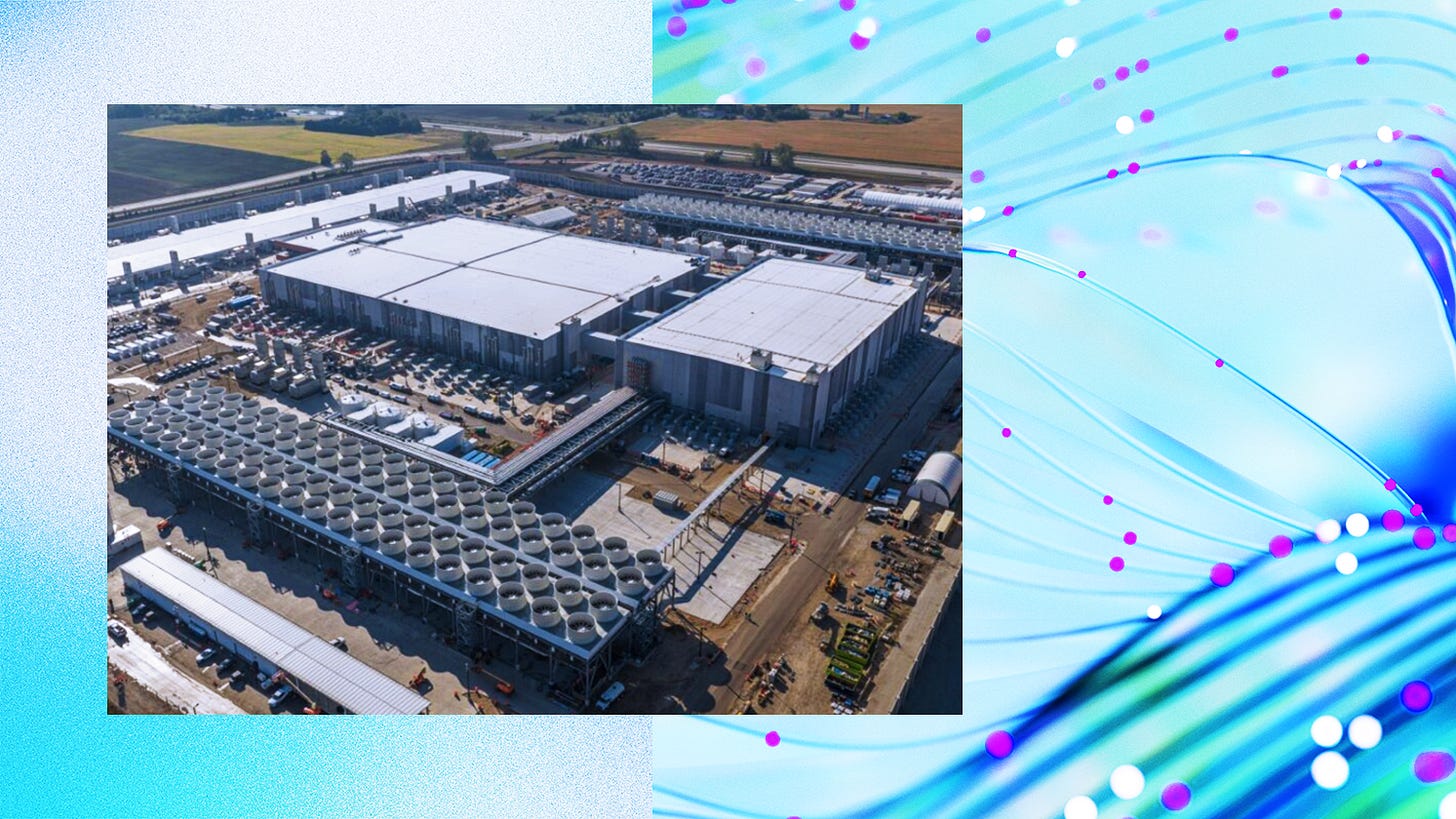
And today we’re going further, announcing the world’s most powerful AI datacenter, located in southeastern Wisconsin.
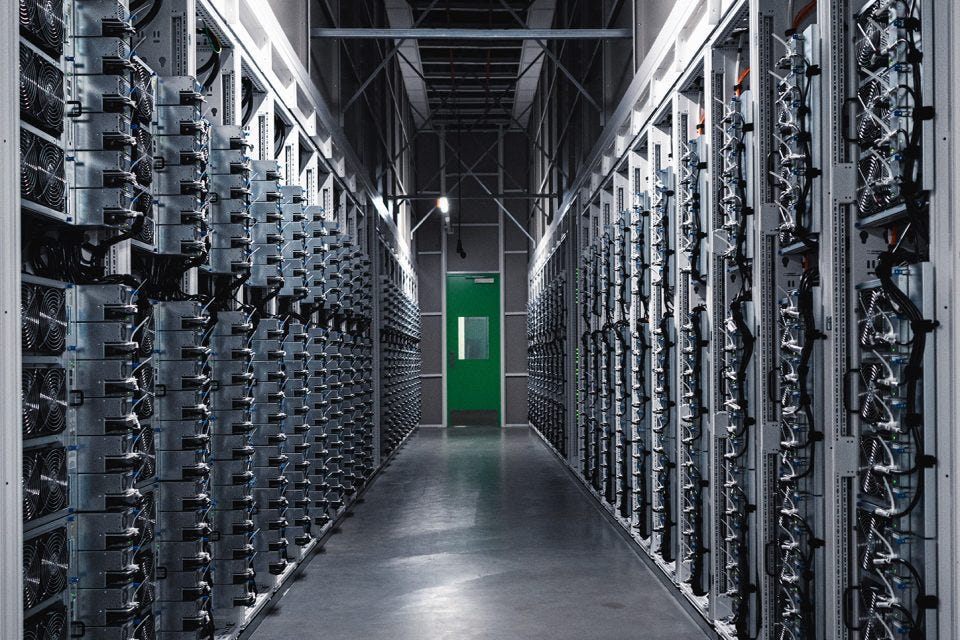
Fairwater is a seamless cluster of hundreds of thousands of NVIDIA GB200s, connected by enough fiber to circle the Earth 4.5 times.
It will deliver 10x the performance of the world’s fastest supercomputer today, enabling AI training and inference workloads at a level never before seen.
For AI training workloads, you need compute at exponential scale. That’s why we designed the datacenter, GPU fleet, and network together as one integrated system. This ensures a single job can run from day 1 at exponential scale across thousands of GPUs.
Fairwater uses a liquid-cooled closed-loop system for cooling GPUs that requires zero water for operations after construction.
And we’re matching all of the energy that is consumed with renewable sources.
And of course, it is just one of several similar sites we’re lighting up across our 70+ regions. We have multiple identical Fairwater datacenters under construction in other locations across the US, in addition to our AI infrastructure already deployed in over 100 datacenters around the world, powering model training, test-time compute, RL tuning, and real-time inference at global scale.
Too often during times like this, people go with the current and only later wonder, how did we get here?
With Fairwater, we’re charting a new path: doing the hard engineering work, bringing compute, network, and storage into one highly scaled cluster, and designing closed-loop energy systems to meet real-world computing needs.
And partnering with local communities to ensure it’s thoughtfully done in a way that is sustainable, creates new jobs, and expands opportunity.
We are thrilled to see this take hold in Wisconsin, and we are just getting started.
+ Related content:
blogs.microsoft.com: [Excerpt] Inside the world’s most powerful AI datacenter.
This datacenter runs a single, massive cluster of interconnected NVIDIA GB200 servers and millions of compute cores and exabytes of storage, all engineered for the most demanding AI workloads. Azure was the first cloud provider to bring online the NVIDIA GB200 server, rack and full datacenter clusters. Each rack packs 72 NVIDIA Blackwell GPUs, tied together in a single NVLink domain that delivers 1.8 terabytes of GPU-to-GPU bandwidth and gives every GPU access to 14 terabytes of pooled memory. Rather than behaving like dozens of separate chips, the rack operates as a single, giant accelerator, capable of processing an astonishing 865,000 tokens per second, the highest throughput of any cloud platform available today. The Norway and UK AI datacenters will use similar clusters, and take advantage of NVIDIAs next AI chip design (GB300) which offers even more pooled memory per rack.
The challenge in establishing supercomputing scale, particularly as AI training requirements continue to require breakthrough scales of computing, is getting the networking topology just right. To ensure low latency communication across multiple layers in a cloud environment, Microsoft needed to extend performance beyond a single rack. For the latest NVIDIA GB200 and GB300 deployments globally, at the rack level these GPUs communicate over NVLink and NVSwitch at terabytes per second, collapsing memory and bandwidth barriers. Then to connect across multiple racks into a pod, Azure uses both InfiniBand and Ethernet fabrics that deliver 800 Gbps, in a full fat tree non-blocking architecture to ensure that every GPU can talk to every other GPU at full line rate without congestion. And across the datacenter, multiple pods of racks are interconnected to reduce hop counts and enable tens of thousands of GPUs to function as one global-scale supercomputer.
blogs.microsoft.com: [Excerpt] Made in Wisconsin: The world’s most powerful AI datacenter.
More than 90 percent of the facility will rely on a state-of-the-art closed-loop liquid cooling system, filled during construction and recirculated continuously. The remaining portion of the facility will use outside air for cooling, switching to water only on the hottest days, minimizing environmental impact and maximizing operational efficiency. The result is a technological milestone — a datacenter with enough fiber cable to circle the Earth four times, yet its annual water use is modest, requiring roughly the amount of water a typical restaurant uses annually or what an 18-hole golf course consumes weekly in peak summer.
Source: Microsoft Corporation
🙂
☑️ #168 Aug 28, 2025
First In-House AI model
microsoft.ai: [Excerpt] Two in-house models in support of our mission.
Since last year, we’ve been focused on building the foundation for this vision, with a world class team and infrastructure. To fully meet our goals, MAI requires purpose-built models. Today, we’re excited to preview the first steps to making this a reality.
First, we’re releasing MAI-Voice-1, our first highly expressive and natural speech generation model, which is available in Copilot Daily and Podcasts, and as a brand new Copilot Labs experience to try out here. Voice is the interface of the future for AI companions and MAI-Voice-1 delivers high-fidelity, expressive audio across both single and multi-speaker scenarios.
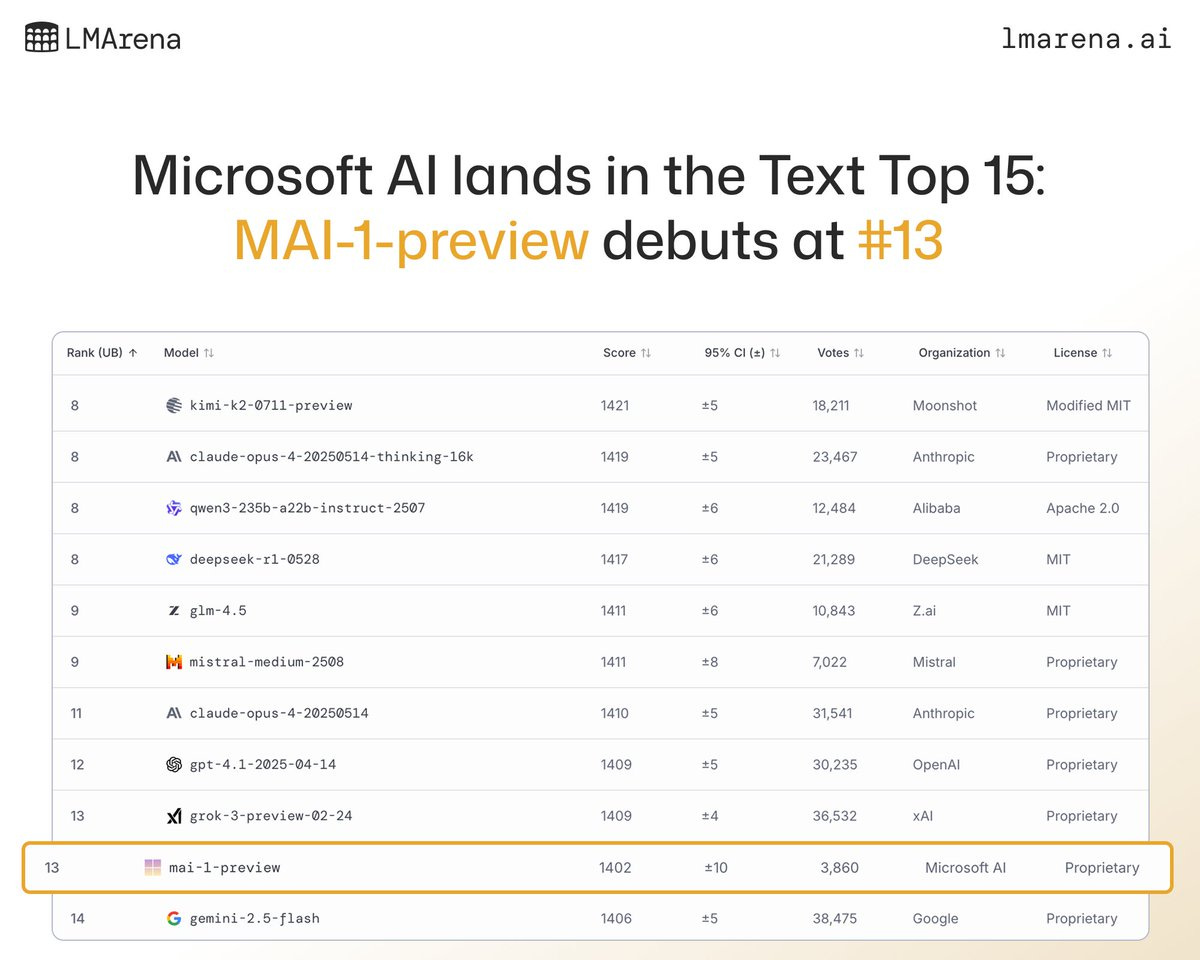
Second, we have begun public testing of MAI-1-preview on LMArena, a popular platform for community model evaluation. This represents MAI’s first foundation model trained end-to-end and offers a glimpse of future offerings inside Copilot. We are actively spinning the flywheel to deliver improved models. We’ll have much more to share in the coming months. Stay tuned!
Congrats to the Microsoft AI team! As the Text Arena is one of the most competitive races, breaking into the Top 15 is no small feat
🙂
☑️ #167 Aug 20, 2025
PropPublica
@propublica: New: Microsoft is required to regularly provide U.S. officials with its plan for keeping government data safe from hacking. Yet a copy of the tech giant’s security plan obtained by ProPublica makes no reference to the company’s China-based operations.
propublica.org (7/18/25): [Excerpt] Microsoft Says It Has Stopped Using China-Based Engineers to Support Defense Department Computer Systems.
After a ProPublica investigation revealed how Microsoft’s “digital escort” tech support service could expose sensitive government data to cyberattacks, the company says China-based engineers will no longer provide assistance on DOD cloud services.
@propublica (6/13/25): Microsoft has long downplayed its role in the 2020 "SolarWinds" attack -- one of the largest cyberattacks in US history -- but a new ProPublica investigation reveals that the tech giant ignored warnings that could have stemmed the damage.. [Thread]
🙂
☑️ #166 Jul 31, 2025
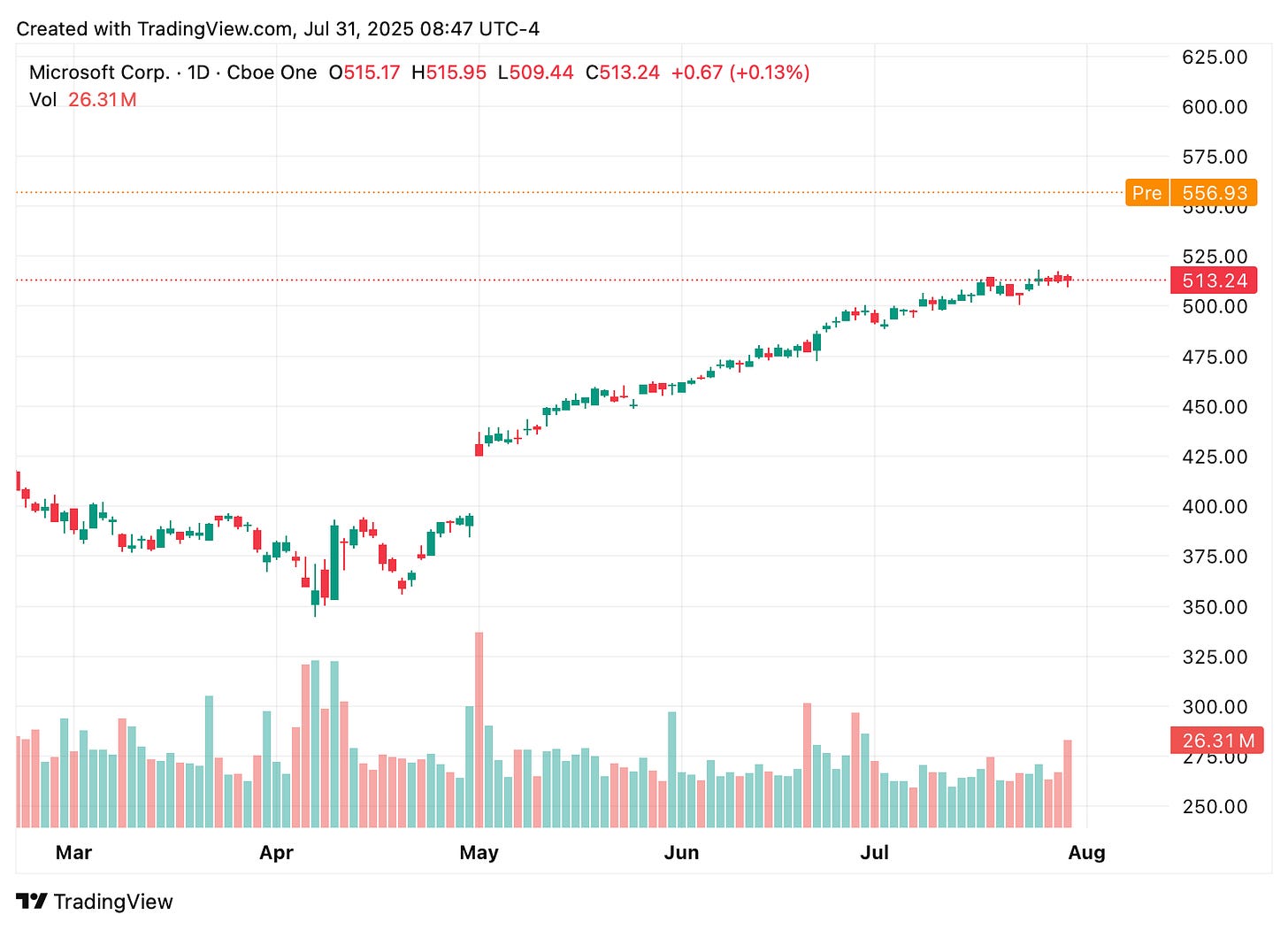
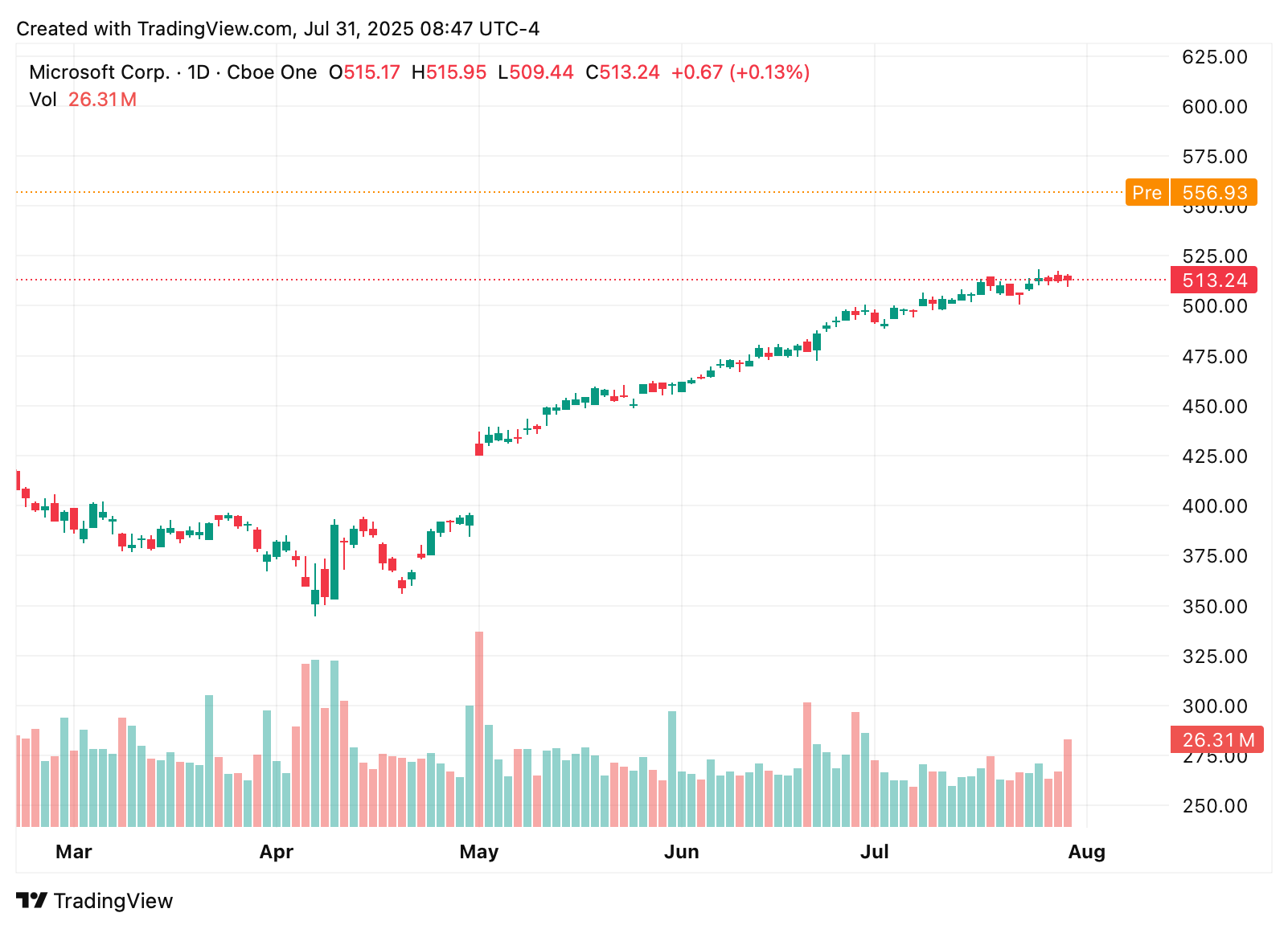
After-hour
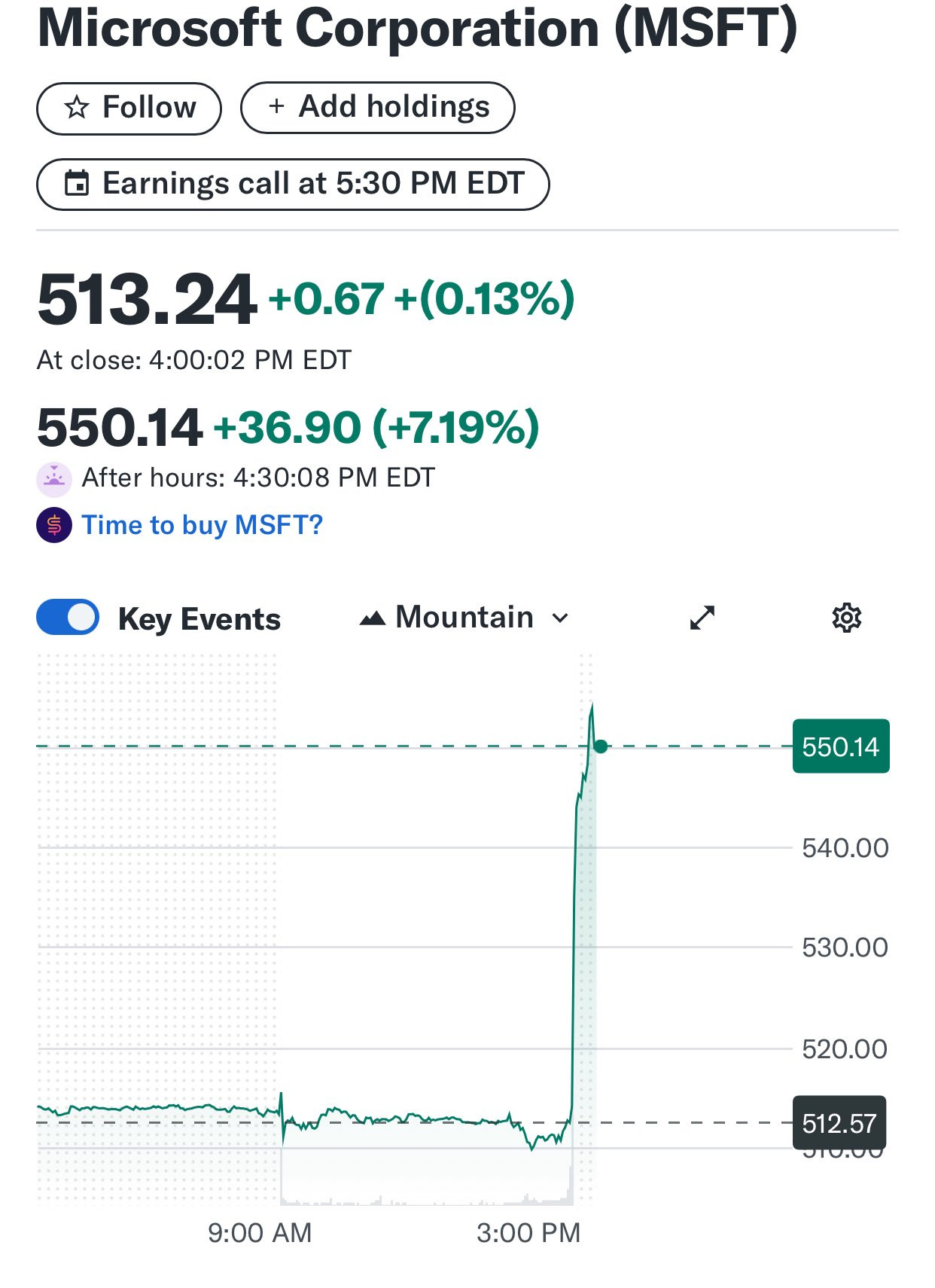
@stevehou0: Insane that MSFT and META together went up after-hours more than the entire market cap of Europe.
⚡️
@TrungTPhan: Microsoft +7% after-hours (up $265B) and Meta +10% after-hours (up $175B). Total $440B market cap gains and incredible levels of we are so back-ness.
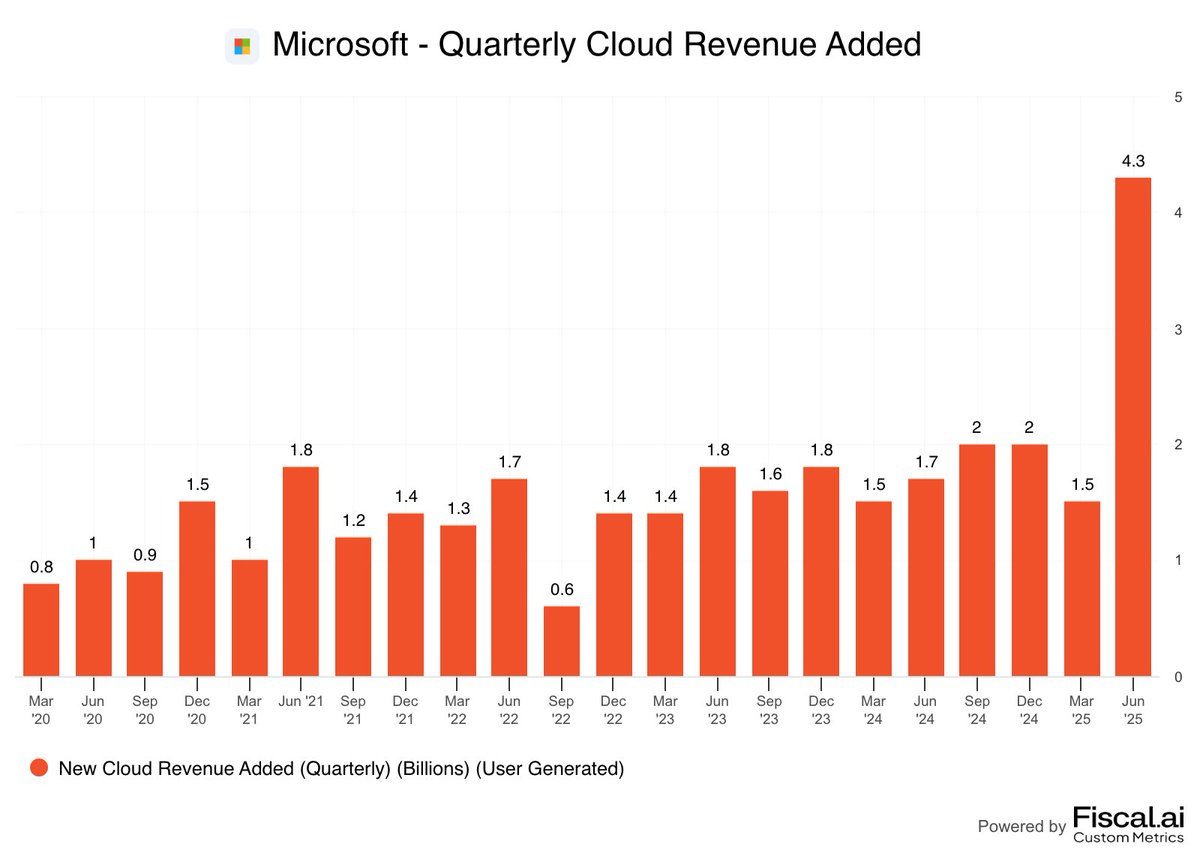
@fiscal_ai: Microsoft added $4.3 billion in new cloud revenue this quarter. That's more than double any other quarter in Microsoft's history. Azure is booming. $MSFT
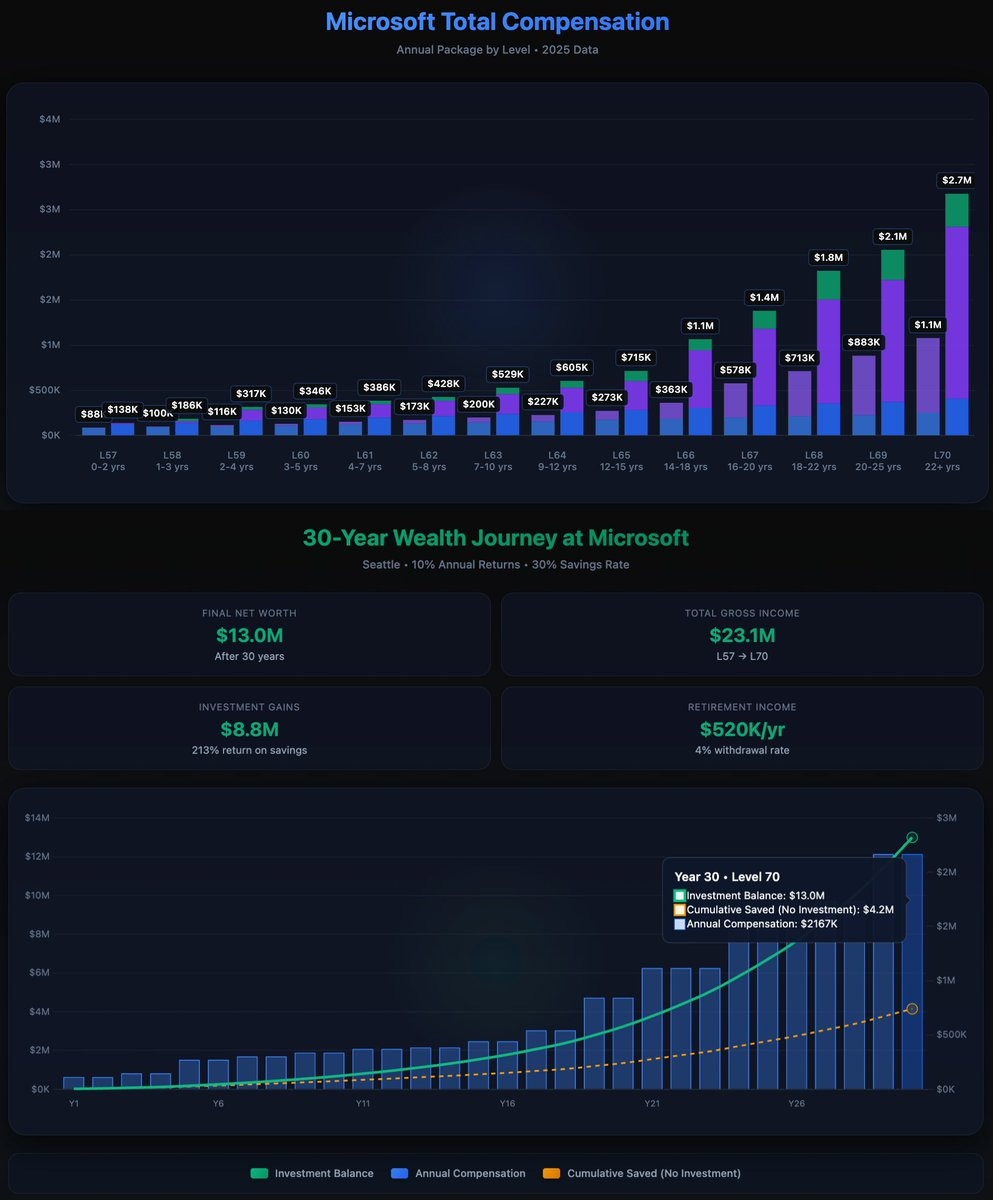
@deedydas (update; 7/31/25): Microsoft just leaked their official compensation bands for engineers. We often forget that you can be a stable high-performing engineer with great work-life balance, be a BigTech lifer and comfortably retire with a net worth of ~$15M
☑️ #165 Jul 19, 2025
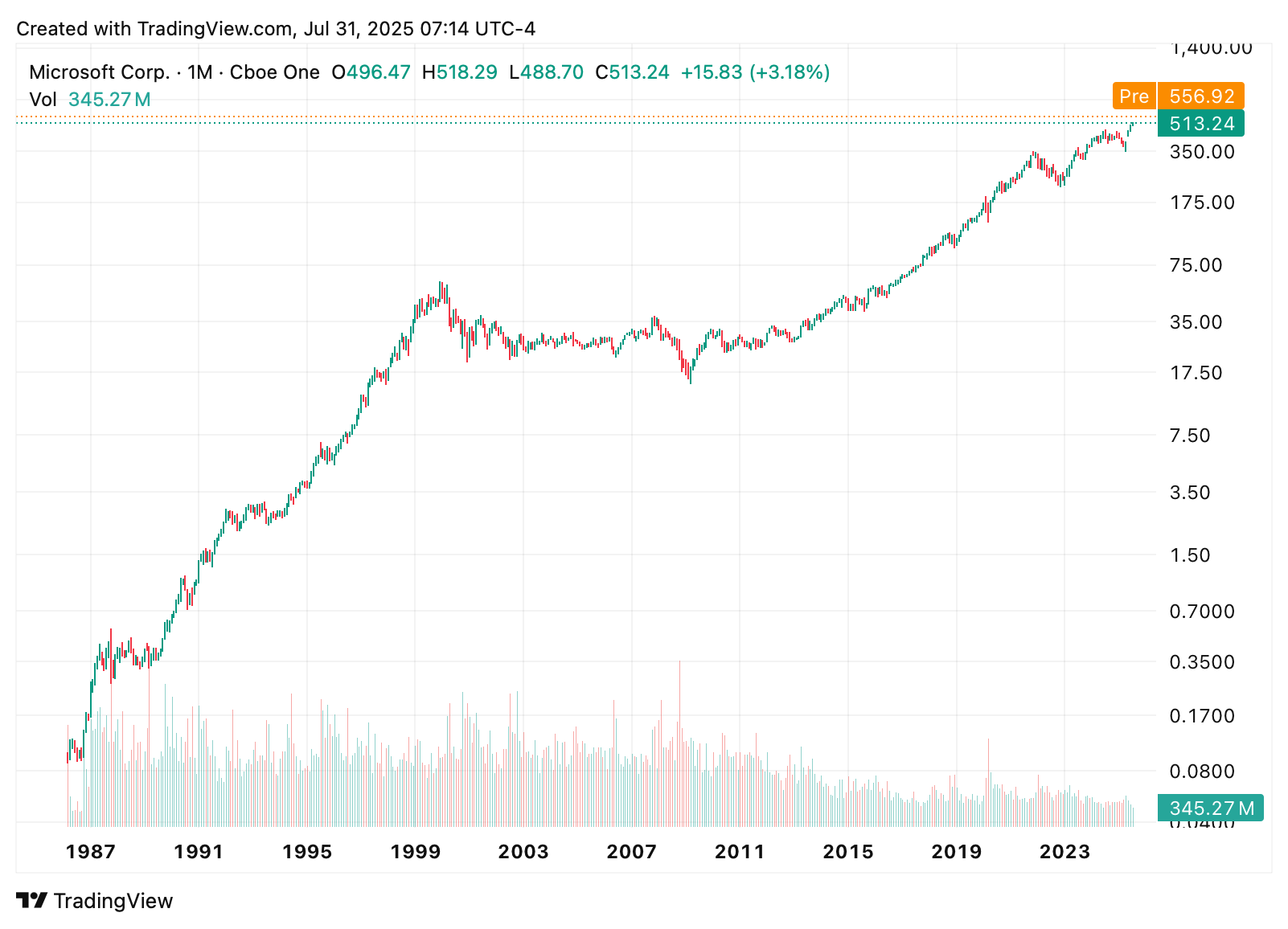
Top #10 since 1995
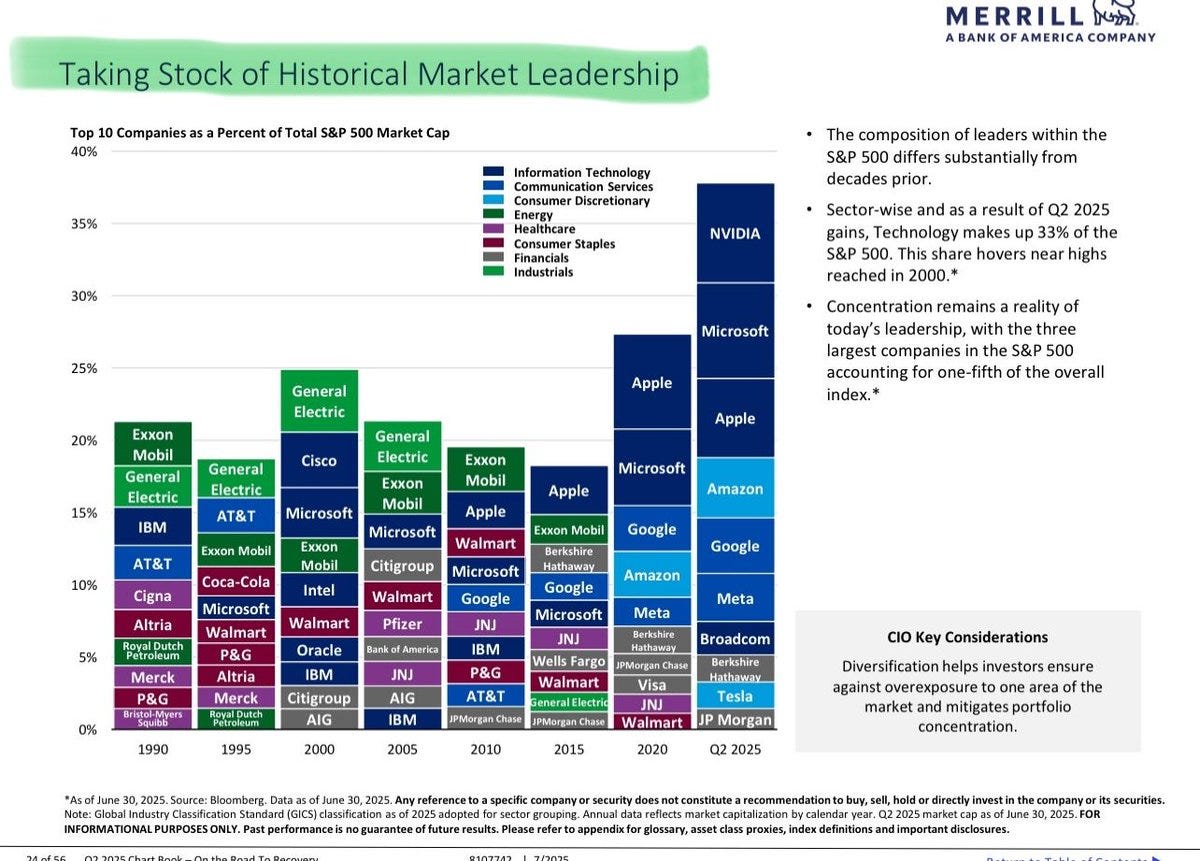
@VladBastion: Did you know that Microsoft is the only stock that has remained in the top 10 by market cap for 30 years? $MSFT
🙂
☑️ #164 Jun 19, 2025
Microsoft prepared to walk away from high-stakes OpenAI talks
ft.com (update; 6/19/25): [Excerpt] ChatGPT maker’s plans to convert into a for-profit leads software giant to make contingency plans.
In discussions over the past year, the two sides have battled over how much equity in the restructured group Microsoft should receive in exchange for the more than $13bn it has invested in OpenAI to date. Discussions over the stake have ranged from 20 per cent to 49 per cent. The pair are also revising the terms of its wider contract, first drafted when Microsoft invested $1bn into OpenAI in 2019.
Under its current arrangement, Microsoft has exclusive rights to sell access to OpenAI’s models and receives a 20 per cent share of revenues up to $92bn.
ft.com (5/25/25): [Excerpt] ‘Microsoft is the AI ringleader’: tech rivals flock to software giant’s stage.
Despite also overseeing the company’s investment in OpenAI, the Microsoft chief has untethered the business from the start-up’s more ambitious vision for general artificial intelligence — where systems match or surpass the abilities of humans.
Instead he has remained steadfast in the view that AI models will become “commoditised”, having less value than being able to sell companies AI-enabled applications and digital assistants built on top of these systems.
Meet the ROG Xbox Ally and ROG Xbox Ally X. Coming this holiday 2025.
Introducing the ROG Xbox Ally and ROG Xbox Ally X – two new premium handhelds that combine the power of Xbox with the freedom of Windows 11. This holiday, players can discover another way to play as we combine the power of Xbox with the freedom you expect from Windows 11, created together with ASUS. And this is only the beginning.
ROG Xbox Ally: powered by the AMD Ryzen™ Z2 A Processor - balancing performance and power consumption to maximize battery life without sacrificing gameplay quality - 16GB of RAM and 512GB of SSD storage.
ROG Xbox Ally X: features the AMD Ryzen™ AI Z2 Extreme processor - allowing us to bring new experiences to life including greater frames-per-second, sharp visuals and increased intelligence - double the storage to have more native games at your fingertips, and 24GB of high-speed RAM and 1TB of SSD storage.
"From AI infra and platforms to apps, we are innovating across the stack to deliver for our customers." - Satya Nadella
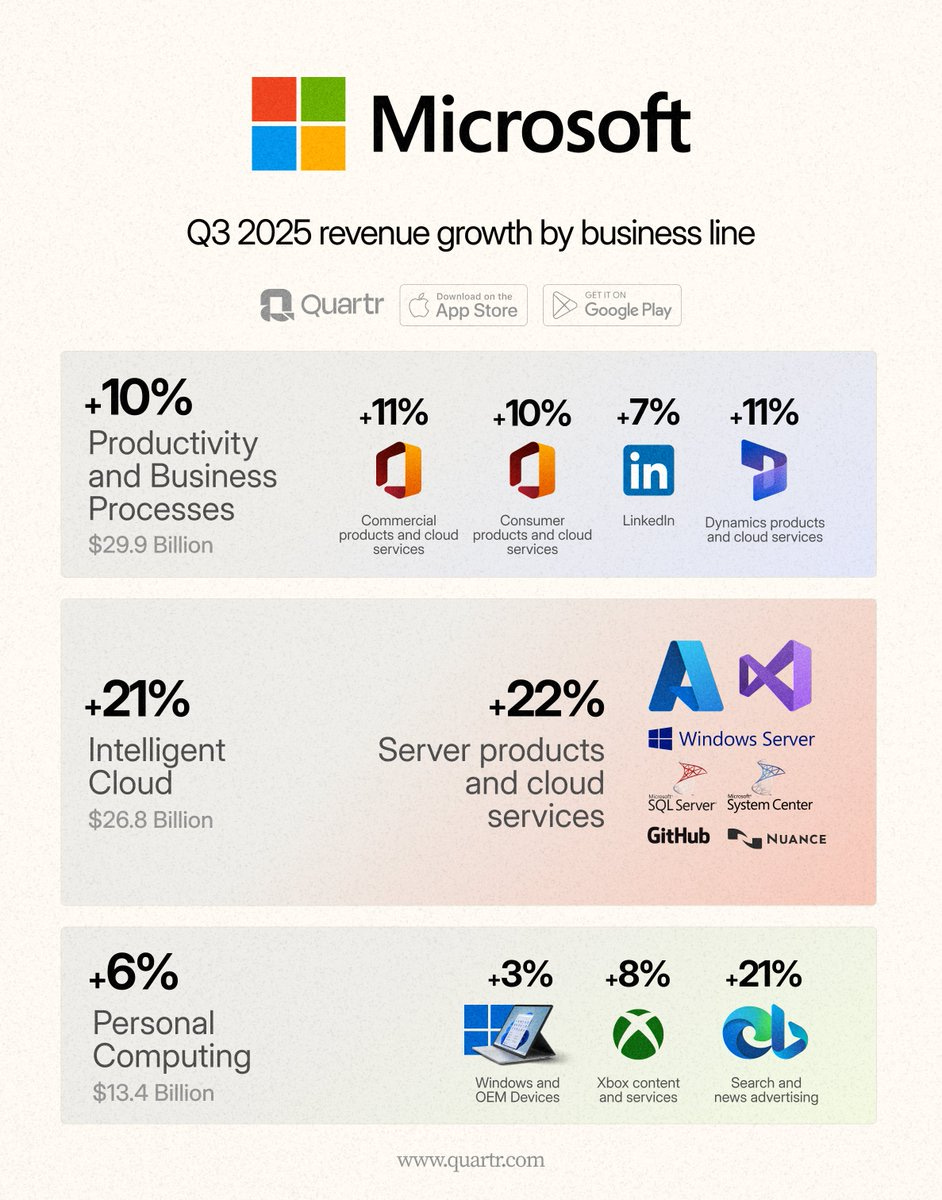
Revenue +13%
Prod. & Business +10%
Intelligent Cloud +21%
Pers. Computing +6%
Azure +33%
LinkedIn +7%
Xbox C&S +8%
EBIT +16%
marg. 45.7% (44.6)
EPS +18%
☑️ #159 Mar 5, 2025
CMA has decided: CLOSED
gov.uk: [Excerpts] Microsoft / OpenAI partnership merger inquiry. The CMA investigated the partnership between Microsoft Corporation (Microsoft) and OpenAI, Inc. (OpenAI).
Found not to qualify decision
5 March 2025: The CMA has decided that Microsoft’s partnership with OpenAI does not qualify for investigation under the merger provisions of the Enterprise Act 2002. The full text of the decision will be published shortly.
According to the rumor, $MSFT is reportedly paying penalties to exit certain data center contracts and power supply agreements, leading to a dramatic change in the outlook for CAPEX growth. It is also claimed that this move could trigger another DeepSeek shockwave in the semiconductor supply chain.
Public Sentiment Over the Weekend:
Since January, some clients have inquired whether Microsoft had canceled any IDCs. Upon verification, it was confirmed that two IDCs—one in Kenosha, Wisconsin, and one in Atlanta, Georgia—were indeed canceled. This information was validated through surveys and interviews with North American data center experts in early February and can also be confirmed by interview records from February 9.
Details and Key Points:
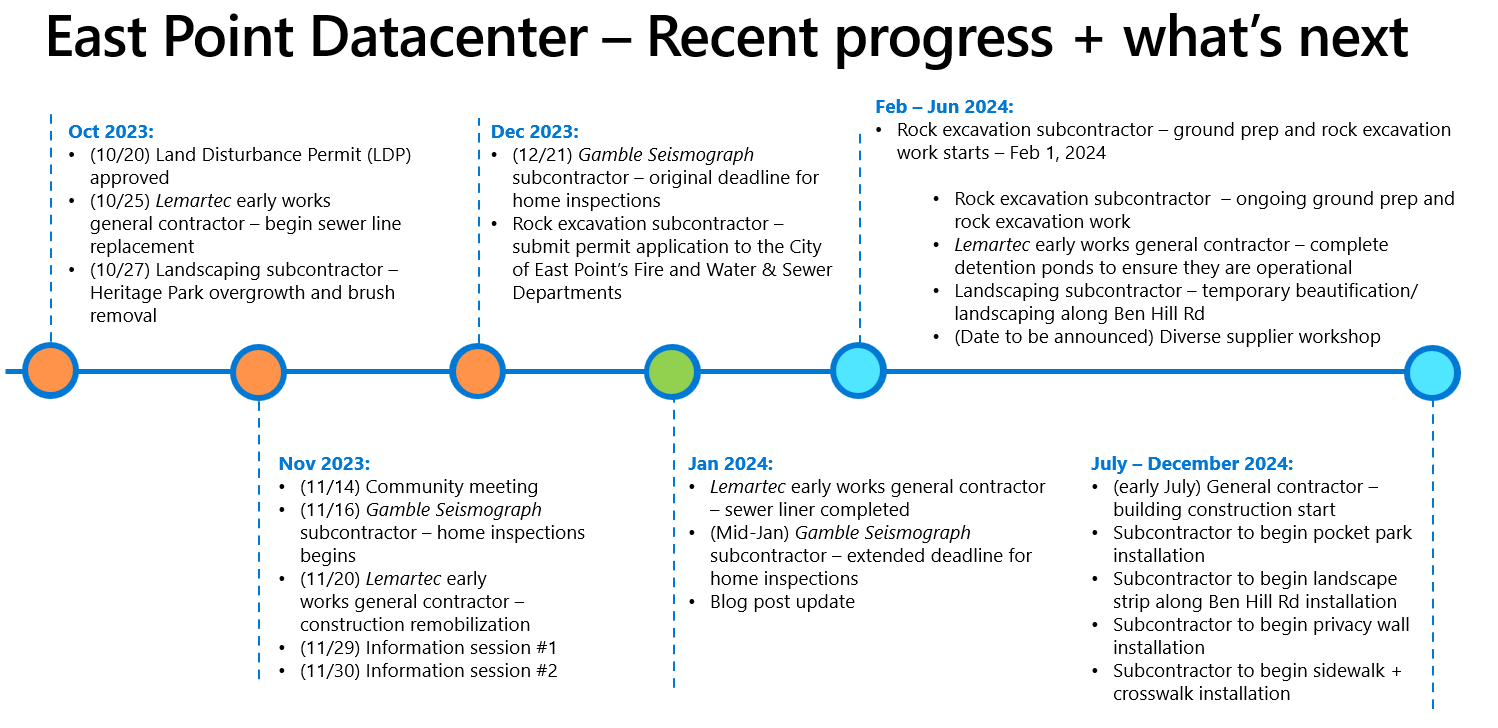
Wisconsin Kenosha Data Center
Site Area: 240 acres
Current Plan: Delayed by 3 years
Reasons for the Delay:
Microsoft will not participate in the Stargate project, so the capacity in Wisconsin is being transferred to Stargate.
The original Wisconsin Kenosha project had planned a CAPEX investment of $3.3 billion.
After this cancellation, the CAPEX for Stargate will not be supplemented by another IDC.
Georgia Atlanta Data Center
Site Area: 488 acres
Current Plan: Delayed by 1.5 years
Reasons for the Delay:
Microsoft overestimated the demand around Atlanta; actual measurements showed that demand is lower than the available supply, rendering a separate data center unnecessary. •
Historically, the Atlanta area has frequently experienced an oversupply, leading to overestimations, and the region has relatively few corporate clients.
Oversupply issues have not been observed in other regions.
Changes in IDC Utilization and DeepSeek:
After the introduction of DeepSeek, no decrease in utilization was observed in other IDCs except for Atlanta, which appears to be an isolated case.
On Azure, GPU utilization increased by 15% following the implementation of DeepSeek, and this phenomenon is expected to continue for about 6 months before returning to normal levels.
The primary reason for the increased utilization is the “Double Purchase” phenomenon, where clients are testing the new DeepSeek model while continuing to use the existing model.
+ Related content:
news.microsoft.com (5/8/24): Microsoft announces $3.3 billion investment in Wisconsin to spur artificial intelligence innovation and economic growth.
@Microsoft: Introducing a breakthrough in quantum computing. The Majorana 1 chip. An approach that ignores the limitations of current models to unleash the power of millions of potential qubits all working together to solve unsolvable challenges in creating new medicines, entirely new materials, and helping our natural world. All on a single chip.
+ Related content:
news.microsoft.com: [Excerpt] Microsoft’s Majorana 1 chip carves new path for quantum computing.
This new architecture used to develop the Majorana 1 processor offers a clear path to fit a million qubits on a single chip that can fit in the palm of one’s hand, Microsoft said. This is a needed threshold for quantum computers to deliver transformative, real-world solutions – such as breaking down microplastics into harmless byproducts or inventing self-healing materials for construction, manufacturing or healthcare. All the world’s current computers operating together can’t do what a one-million-qubit quantum computer will be able to do.
@Microsoft : Majorana 1 Explained: The Path to a Million Qubits.
Hear from the Microsoft team behind the recent breakthrough in physics and quantum computing demonstrated by the new Majorana 1 chip, engineered from an entirely new material that has the potential to scale to millions of qubits on a single chip. Find out what is possible...
Operating income was $31.7 billion and increased 17% (up 16% in constant currency)
Net income was $24.1 billion and increased 10%
Diluted earnings per share was $3.23 and increased 10%
⇢ Some reactions:
@charliebilello: Microsoft reported record Revenue ($262 billion) and Net Income ($93 billion) in 2024, up 180% and 369% over the last decade. $MSFT
Video:
@dividendology: Here's why I love $MSFT stock: If you own $MSFT, you basically own a tech ETF. They have a wide variety of businesses segments, many which benefit from network effects. And many of these business segments are seeing double digit growth year over year.
☑️ #156 January 21, 2025
Microsoft and OpenAI evolve partnership to drive the next phase of AI
blogs.microsoft.com: [Excerpt] The key elements of our partnership remain in place for the duration of our contract through 2030, with our access to OpenAI’s IP, our revenue sharing arrangements and our exclusivity on OpenAI’s APIs all continuing forward – specifically:
Microsoft has rights to OpenAI IP (inclusive of model and infrastructure) for use within our products like Copilot. This means our customers have access to the best model for their needs.
The OpenAI API is exclusive to Azure, runs on Azure and is also available through the Azure OpenAI Service. This agreement means customers benefit from having access to leading models on Microsoft platforms and direct from OpenAI.
Microsoft and OpenAI have revenue sharing agreements that flow both ways, ensuring that both companies benefit from increased use of new and existing models.
Microsoft remains a major investor in OpenAI, providing funding and capacity to support their advancements and, in turn, benefiting from their growth in valuation.
blogs.microsoft.com: [Excerpt] This new division will bring together Dev Div, AI Platform, and some key teams from the Office of the CTO (AI Supercomputer, AI Agentic Runtimes, and Engineering Thrive), with the mission to build the end-to-end Copilot & AI stack for both our first-party and third-party customers to build and run AI apps and agents. This group will also build out GitHub Copilot, thus having a tight feedback loop between the leading AI-first product and the AI platform to motivate the stack and its roadmap.
Scoop: Advanced AI chips cleared for export to UAE under Microsoft deal
axios.com: [Excerpt] The U.S. government has approved the export of advanced AI chips to a Microsoft-operated facility in the UAE as part of the company's highly-scrutinized partnership with Emirati AI firm G42, two sources familiar with the deal told Axios.
Zoom in:
The approved export license requires Microsoft to prevent access to the facility by personnel who are from Group D:5 countries, which are nations with U.S. arms embargoes, or who are on the Bureau of Industry and Security (BIS) Entity List, according to two sources familiar with the deal.
Microsoft and the Commerce Department declined to comment.
🙂
☑️ #153 Dec 5, 2024
Free Enterprise Project (FEP) makes history with Microsoft Bitcoin proposal
nationalcenter.org: [Excerpt] On Tuesday, MicroStrategy Chairman Michael Saylor will present a proposal at Microsoft’s annual shareholder meeting on behalf of the Free Enterprise Project (FEP) that asks Microsoft to consider adding bitcoin to its balance sheet.
This proposal — the first FEP has ever submitted on the subject of cryptocurrency — has become one of our most viral proposals to date, with a flurry of media (especially in the cryptocurrency media universe) occurring in three waves: once in October when an SEC filing first announced the proposal, once in November when it was announced that Saylor would present the proposal, and again this week when Saylor preemptively released his presentation on X (Twitter) and then discussed it on media outlets including CNBC and Fox News.
@timkotzman8925 (11/22/24): Executives Would Adopt BTC If They Actually Cared About Shareholders.
🙂
☑️ #152 Dec 4, 2024
Microsoft shares strong progress on datacenter region in Saudi Arabia; construction complete on three sites, with availability expected in 2026
news.microsoft.com: [12/4/24] Completing construction of three Azure availability zones marks major milestone in Microsoft’s ongoing investments in the Kingdom.
Datacenter region will respond to demand for Microsoft’s highly secure and globally trusted cloud services from governments and key industries in Saudi Arabia.
Microsoft’s datacenter ecosystem is set to significantly contribute to AI education throughout the Kingdom, with the goal of equipping over 100,000 professionals with essential AI competencies by 2025.
@TrendSpider: BREAKING: The FTC launches antitrust investigation into Microsoft. $MSFT
+ Related content:
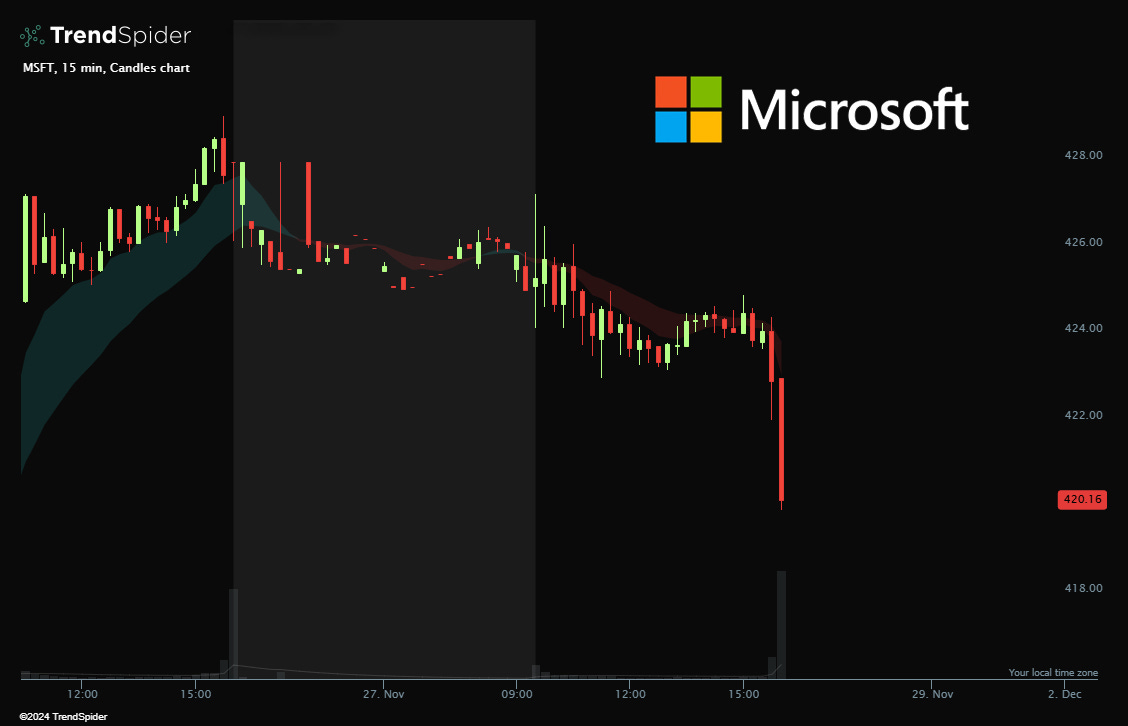
reuters.com (11/27/24): [Excerpt] Microsoft faces wide-ranging US antitrust probe. (Reuters) -The U.S. Federal Trade Commission has opened a broad antitrust investigation into Microsoft, including of its software licensing and cloud computing businesses, a source familiar with the matter said on Wednesday.
The probe was approved by FTC Chair Lina Khan ahead of her likely departure in January. The election of Donald Trump as U.S. president, and the expectation he will appoint a fellow Republican with a softer approach toward business, leaves the outcome of the investigation up in the air.
The FTC has demanded a broad range of detailed information from Microsoft, Bloomberg reported earlier on Wednesday.
🙂
☑️ #149 Nov 24, 2024
If you are a writer who uses MS Word to write any proprietary content (blog posts, novels, or any work you intend to protect with copyright and/or sell), you’re going to want to turn this feature off immediately.
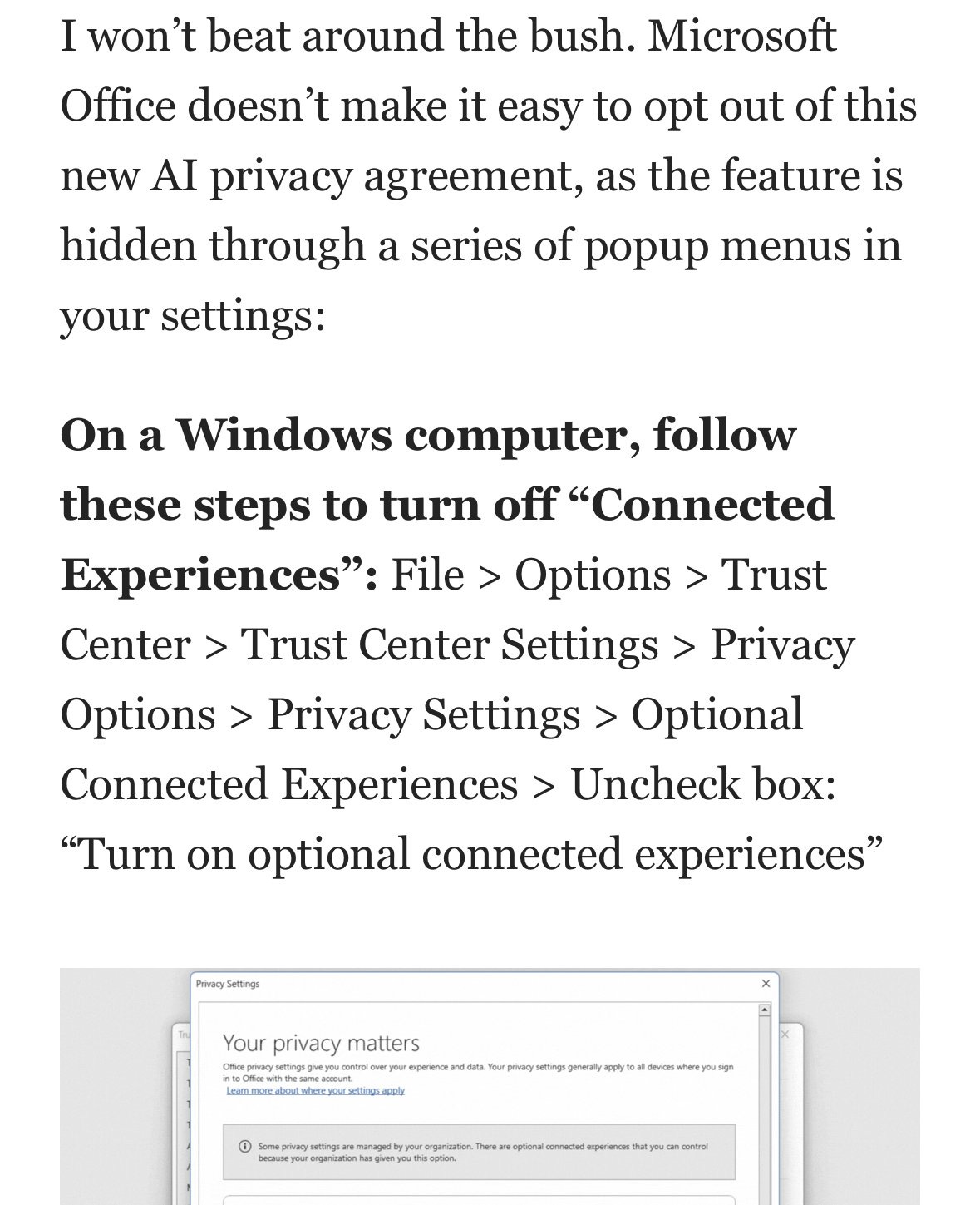
@nixcraft: Heads up: Microsoft Office, like many companies in recent months, has slyly turned on an “opt-out” feature that scrapes your Word and Excel documents to train its internal AI systems. This setting is turned on by default, and you have to manually uncheck a box in order to opt out. If you are a writer who uses MS Word to write any proprietary content (blog posts, novels, or any work you intend to protect with copyright and/or sell), you’re going to want to turn this feature off immediately.
⚡️
@Microsoft365 (11/25/24): In the M365 apps, we do not use customer data to train LLMs. This setting only enables features requiring internet access like co-authoring a document.
Microsoft opens first robotics, AI research lab in Japan
nhk.or.jp: [Excerpt] The lab plans to focus on so-called embodied AI for applications in manufacturing, healthcare and other industries. It will also cooperate with major Japanese companies and universities.
"Robotics in Japan is one of the most important reasons we have established the research lab here. So we're both hopeful and optimistic that by establishing this research lab in Japan, which is at the very forefront of robotics that we will have a better success advancing our research in embodied AI."
ignite.microsoft.com: [Excerpt] Experience the latest innovations for AI transformation.
Discover solutions that help modernize and manage intelligent apps, safeguard data, accelerate productivity, and expand your services, while connecting with partners and growing your community or business.
@Microsoft: Full Keynote: Satya Nadella at Microsoft Ignite 2024.
@Microsoft: Introducing Windows 365 Link: Satya Nadella at Microsoft Ignite 2024.
@ashtom: At Ignite, @satyanadella just unveiled our sweeping new agentic future for Copilot Workspace. Workspace is the most advanced – and the first – agentic IDE. Built right in the GitHub Issue, Workspace deploys five agents to get you all the way to the pull request: Brainstorm. Spec. Plan. Implement. Build/Repair (¼) Thread
learn.microsoft.com (11/19/24): What is Azure AI Foundry? Azure AI Studio is now Azure AI Foundry. We're updating the documentation to reflect this change. In the meantime, you might see references to Azure AI Studio.
Build generative AI applications on an enterprise-grade platform.
Explore, build, test, and deploy using cutting-edge AI tools and ML models, grounded in responsible AI practices.
Collaborate with a team for the full life-cycle of application development.
With AI Foundry, you can explore a wide variety of models, services and capabilities, and get to building AI applications that best serve your goals. The Azure AI Foundry platform facilitates scalability for transforming proof of concepts into full-fledged production applications with ease. Continuous monitoring and refinement support long-term success
As announced in the MSRC Blog, Securing AI and cloud with the Microsoft Zero Day Quest, the Microsoft Zero Day Quest invites security researchers to discover and report high-impact vulnerabilities in Microsoft AI and Cloud Bounty Programs: AI, Microsoft Azure, Microsoft Identity, M365, and Microsoft Dynamics 365 and Power Platform. This new program provides new opportunities for the security community to work hand in hand with Microsoft engineers and security researchers to share, learn, and build community as we work to keep everyone safe.
This challenge has two distinct opportunities opportunities:
A Research Challenge (open to everyone)
An Onsite Hacking Event (invite only)
The Onsite Hacking Event is an invite only event automatically extended to Microsoft’s top 10 ranked researchers from each of the 2024 Annual Azure, Dynamics, and Office Leaderboards. An additional 45 researchers will be invited based on their submissions to the research challenge, which is open to everyone.
msrc.microsoft.com: [Excerpt] Securing AI and Cloud with the Zero Day Quest. Our security teams work around the clock to help protect every person and organization on the planet from security threats. We also know that security is a team sport, and that’s why we also partner with the global security community through our bug bounty programs to proactively identify and mitigate potential issues before our customers are impacted. Unique perspectives from the brightest security minds add another layer to our overall strategy to protect our ecosystem. By incentivizing high-impact research, we raise the security bar for everyone.
Today, we are building on that history of partnership and expanding our bug bounty programs with the Zero Day Quest. This new hacking event will be the largest of its kind, with an additional $4 million in potential awards for research into high-impact areas, specifically cloud and AI. Zero Day Quest will provide new opportunities for the security community to work hand in hand with Microsoft engineers and security researchers – bringing together the best minds in security to share, learn, and build community as we work to keep everyone safe. Read more
🙂
☑️ #145 Nov 19, 2024
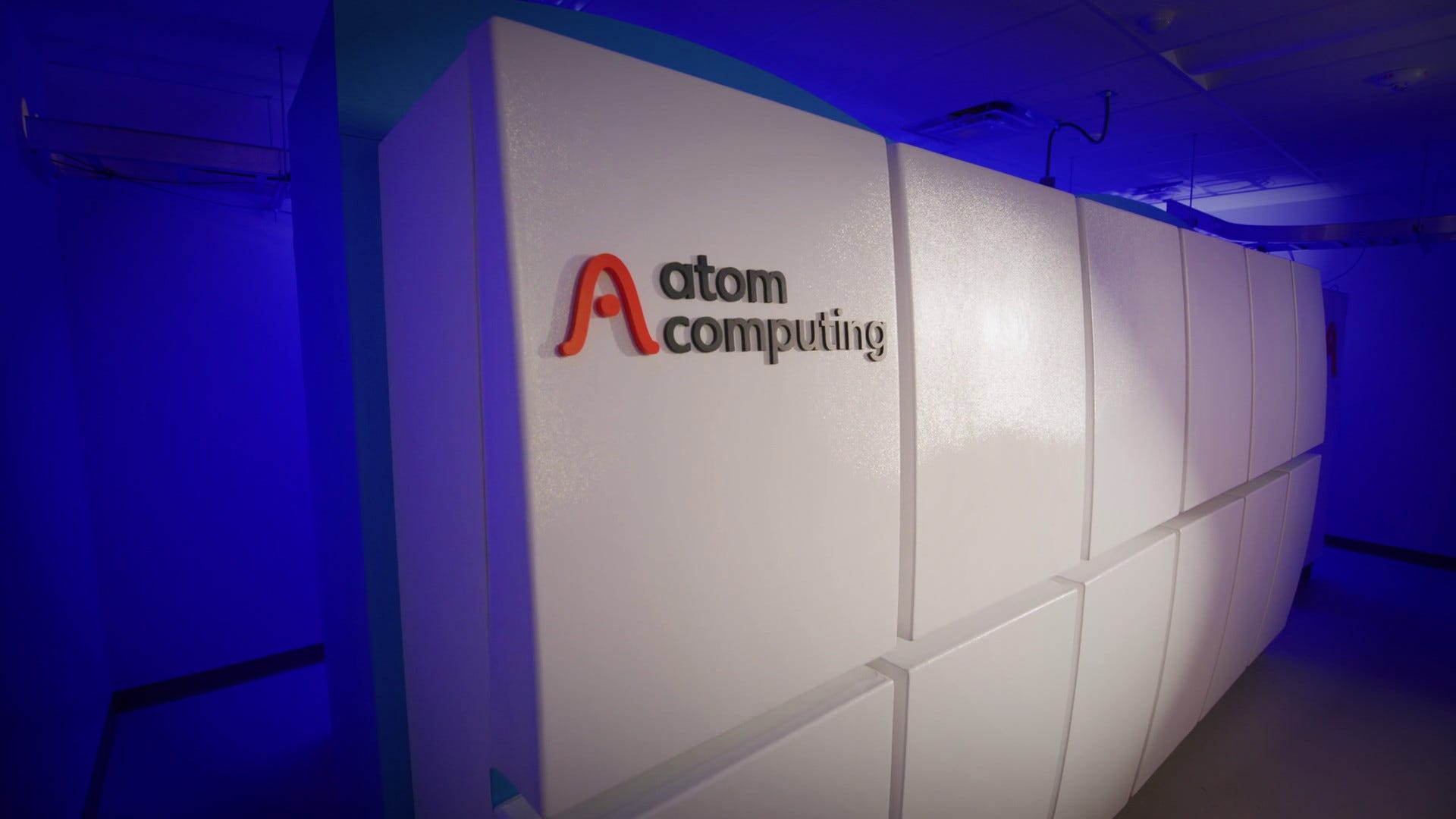
Demonstrating high-fidelity gates and the world’s largest entangled logical qubit state in Atom Computing’s flagship systems
atom-computing.com: [Excerpt] In September Microsoft announced their collaboration with Atom Computing to build the world’s most powerful quantum machine, and create a unique commercial offering which is available for order today.
Just two months after this announcement we are excited to share the news that together we have now entangled 24 logical qubits, setting a new world record. We also jointly demonstrated error detection, correction, and computation with 28 logical qubits on Atom’s flagship systems. More information on this work can be found in the Azure Quantum technical blog.
The world’s first 3D replica of St. Peter’s Basilica, made with Microsoft AI
@Microsoft: Photogrammetry, AI, and digital preservation combine to create a digital twin of St. Peter’s Basilica with thousands of images, allowing visitors to explore it in detail from anywhere in the world. Located in Vatican City, St. Peter’s Basilica is over 400 years old, and is one of the most well-known churches in the world revered for its breathtaking Renaissance and Baroque architecture. Famous architects like Michelangelo and Bernini contributed to the design of the church, which took over 100 years to complete. Today, La Basilica di San Pietro—a collaboration between the Vatican, Iconem, and Microsoft—gives everyone full access to Vatican City’s most iconic church via AI-enabled immersive exhibits and an interactive website. Explore St. Peter’s Basilica in 3D:
Microsoft Plans to Spend $10 Billion on Core Weave Servers Through 2030
theinformation.com: [Excerpt] CoreWeave, a cloud provider that rents access to Nvidia artificial intelligence chips, has told investors its revenue will rise dramatically in the coming years, thanks in large part to a new contract with Microsoft, The Information reported on Friday .
CoreWeave projected revenue would quadruple next year to around $8 billion, and the company plans to file confidentiality for an initial public offering.
This week an astroturf group organized by Google is launching. It is designed to discredit Microsoft with competition authorities, and policymakers and mislead the public. Google has gone through great lengths to obfuscate its involvement, funding, and control, most notably by recruiting a handful of European cloud providers, to serve as the public face of the new organization. When the group launches, Google, we understand, will likely present itself as a backseat member rather than its leader. It remains to be seen what Google offered smaller companies to join, either in terms of cash or discounts.
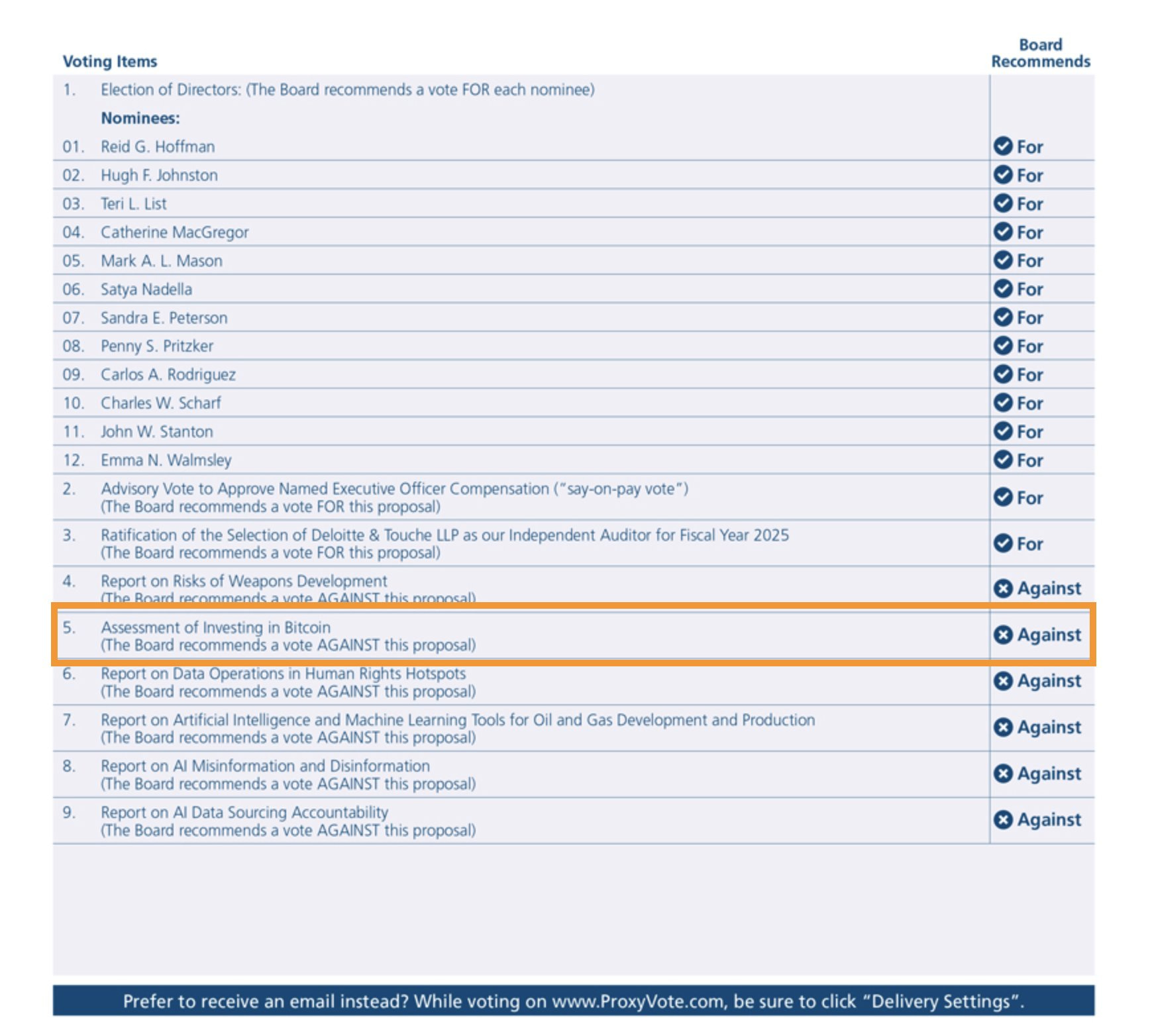
@inbitcoinwetrust: Per an SEC filing, Microsoft will have a proposed board resolution for an “Assessment of Investing in Bitcoin”.
The board is recommending that shareholders vote AGAINST the proposal.
The proposal uses MicroStrategy as an example, stating that MicroStrategy's stock market performance has been far greater than Microsoft's since Michael J. Saylor switched his company to a full Bitcoin strategy.
This proposal has little chance of success, in my opinion, but it's interesting to see that the question of whether or not giants like Microsoft should adopt Bitcoin is now becoming increasingly serious.
And if the question arises for Microsoft, it will also arise for Apple, Google, Amazon, etc.
Who will be the first to adopt this Bitcoin strategy among the Tech giants?
sec.gov (10/24/24): > Schedule 14A > Notice of Annual Shareholders Meeting and Proxy Statement 2024.
🙂
☑️ #140 Oct 21, 2024
Unlocking autonomous agent capabilities with Microsoft Copilot Studio
microsoft.com: [Excerpt] New capabilities coming to Copilot Studio.
Copilot Studio provides an all-in-one platform for building agents, with managed software as a service (SaaS) infrastructure, AI models, a low-code design interface, and thousands of prebuilt connectors. It integrates personal, business, and analytical data, and enables publishing to Copilot, web, and your apps. These new capabilities allow agents to act independently, initiate events, and automate complex business tasks. Let’s explore how this works.
Autonomous triggers
Agents can automatically respond to signals across your business and initiate tasks. They can be configured to react to events or triggers without human input that instead originate from various tools, systems, and databases, or are even scheduled to run hourly, daily, weekly, or monthly.
github.com: bitnet.cpp is the official inference framework for 1-bit LLMs (e.g., BitNet b1.58). It offers a suite of optimized kernels, that support fast and lossless inference of 1.58-bit models on CPU (with NPU and GPU support coming next).
The first release of bitnet.cpp is to support inference on CPUs. bitnet.cpp achieves speedups of 1.37x to 5.07x on ARM CPUs, with larger models experiencing greater performance gains. Additionally, it reduces energy consumption by 55.4% to 70.0%, further boosting overall efficiency. On x86 CPUs, speedups range from 2.37x to 6.17xwith energy reductions between 71.9% to 82.2%. Furthermore, bitnet.cpp can run a 100B BitNet b1.58 model on a single CPU, achieving speeds comparable to human reading (5-7 tokens per second), significantly enhancing the potential for running LLMs on local devices. More details will be provided soon.
BitNet: Scaling 1-bit Transformers for Large Language Models: [Abstract] The increasing size of large language models has posed challenges for deployment and raised concerns about environmental impact due to high energy consumption. In this work, we introduce BitNet, a scalable and stable 1-bit Transformer architecture designed for large language models. Specifically, we introduce BitLinear as a drop-in replacement of the nn.Linear layer in order to train 1-bit weights from scratch. Experimental results on language modeling show that BitNet achieves competitive performance while substantially reducing memory footprint and energy consumption, compared to state-of-the-art 8-bit quantization methods and FP16 Transformer baselines. Furthermore, BitNet exhibits a scaling law akin to full-precision Transformers, suggesting its potential for effective scaling to even larger language models while maintaining efficiency and performance benefits.
🙂
☑️ #138 Oct 8, 2024
The 1st cloud running Nvidia’s Blackwell system with GB200-powered AI servers
@Azure: Microsoft Azure is the 1st cloud running @nvidia's Blackwell system with GB200-powered AI servers. We're optimizing at every layer to power the world's most advanced AI models, leveraging Infiniband networking and innovative closed loop liquid cooling. Learn more at MS Ignite.
🙂
☑️ #137 Oct 1, 2024
Microsoft Is Discontinuing HoloLens 2, With No Replacement
uploadvr.com: [Excerpt] HoloLens 2 production has ended, Microsoft confirmed to UploadVR.
Now is the last time to buy the device before stock runs out, the company has been telling its partners and customers.
HoloLens 2 will continue to receive "updates to address critical security issues and software regressions" until December 31 2027. As soon as 2028 starts, software support for HoloLens 2 will end.
For the original HoloLens headset from 2016, software support will end after December 10 of this year, just over two months from now. Production of it ended back in 2018.
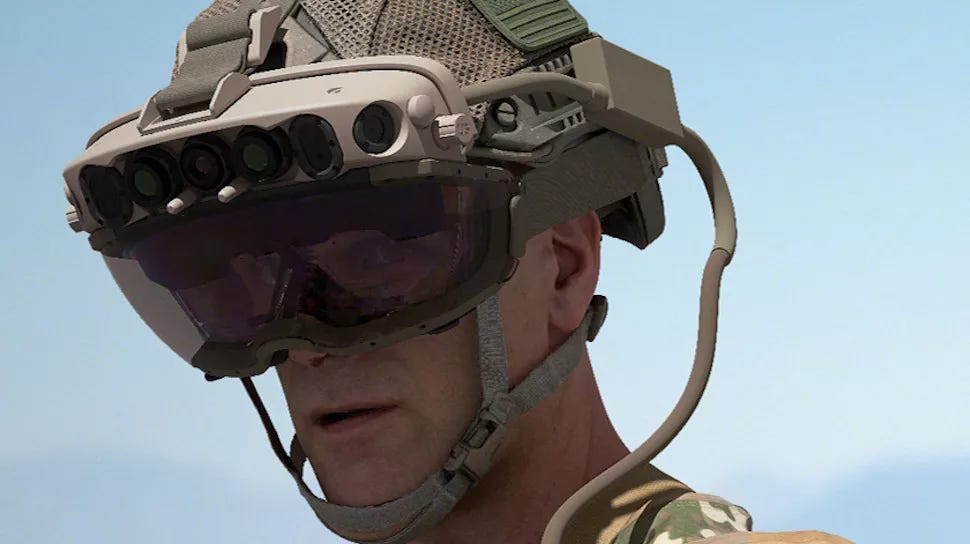
While HoloLens 2 is being discontinued, Microsoft tells UploadVR it remains "fully committed" to the militarized HoloLens IVAS.
techradar.com (7/20/23): [Excerpts] Upgraded Microsoft Hololens is on the way, but the US Army will get it first. Microsoft is finally fixing those heavy Hololens headsets.
Microsoft has confirmed it will be providing the US Army with new prototypes of its Hololens headset following complaints about previous models.
Several months have passed since the Army reportedly first complained about the usability of its Microsoft Hololens headsets, which were said to be heavy, uncomfortable, and a little too conspicuous.
Now, though, a series of improved IVAS (Integrated Visual Augmentation System) 1.2 devices is set to be delivered by the end of this month
Military-Grade Hololens 1.2 model. Source: Microsoft Corporation
Rumors (7/20/23)

Bloomberg: The Army is expecting to carry out three rounds of testing starting next month upon this month’s receipt of 20 prototype devices.

Engadget: Operational combat test could be on the cards as soon as April 2025.
@XorNot (10/2/24): The military has been pursuing AR technology for a long time, and will continue to do so in the future.
There's plenty of application for AR, provided it can be made to work well for practical command or battlefield applications: R&D is ultimately expensive, and a contract from the military would've been for the supply and testing of it in this application.
(i.e. to properly test such a thing, you've still got to pay someone to build the sort of software and interfaces you think you might need before you can even put a soldier in the field to trial it).
The open source Microsoft 365 alternative openDesk plans to launch its version 1.0 in mid-October
@KeDKorte: Germany is building an open-source online workspace for its public administration. OpenDesk is moving towards its release in October. It's excellent that @Univention is a part of it. #opensource#sovereignworkplace
@openprojectgmbh: The open source Microsoft 365 alternative openDesk, which is supported by the German government, plans to launch its version 1.0 in mid-October. The different components of the office and collaboration suite are established open source software from Collabora, Element, Nextcloud, Nordeck, Open-Xchange, Univention, OpenProject and XWiki.
bmi.bund.de: Bundesministerium des Innern und für Heimat (DE)
🙂
☑️ #135 Sep 20, 2024
Constellation to Launch Crane Clean Energy Center, Restoring Jobs and Carbon-Free Power to The Grid
constellationenergy.com: [Excerpt] Constellation signs its largest-ever power purchase agreement with Microsoft, a deal that will restore TMI Unit 1 to service and keep it online for decades; add approximately 835 megawatts of carbon-free energy to the grid; create 3,400 direct and indirect jobs and deliver more than $3 billion in state and federal taxes.
LONDONDERRY, PA (Sept 20, 2024) Constellation (Nasdaq: CEG) announced today the signing of a 20-year power purchase agreement with Microsoft that will pave the way for the launch of the Crane Clean Energy Center (CCEC) and restart of Three Mile Island Unit 1, which operated at industry-leading levels of safety and reliability for decades before being shut down for economic reasons exactly five years ago today. Under the agreement, Microsoft will purchase energy from the renewed plant as part of its goal to help match the power its data centers in PJM use with carbon-free energy.
What Joseph Dominguez failed to mention when he proclaimed that Constellation was not asking for a penny from the state or from utility customers to restart Three Mile Island was that in May it applied for a $1.6 billion federal loan guarantee — which coincidentally is precisely the amount of money it plans to invest to restart the shuttered reactor. According to the Washington Post, the taxpayer-backed loan could give Microsoft and Constellation Energy a major boost in their unprecedented bid to steer all the power from a US nuclear plant to a single company. Microsoft is one of many large tech companies scouring the nation for zero emissions power for its data centers and one of the leaders in the field of artificial intelligence.
Since 2012, more than a dozen nuclear plants have been shut down in the United States, in some cases as a result of unfavourable economics. Less cost-effective plants — such as those with only a single working reactor — struggled to remain profitable in states with deregulated electricity markets and widely varying prices. Three Mile Island, owned by the utility company Constellation Energy in Baltimore, Maryland, is a prime example. Today, 54 US plants remain in operation, running a total of 94 reactors.
Three Mile Island to be restarted to power Microsoft data centers (9/22/24): [Excerpt]In a remarkable topical twofer, not only is Microsoft turning to nuclear power to run its data centers, it's commissioned the restarting of the infamous Three Mile Island station – the site of the worst commercial nuclear accident in US history.
“this chart. Please update your priors on nuclear if anything here is surprising.”
🙂
☑️ #134 Sep 17, 2024
Global Infrastructure Partners, BlackRock, Microsoft, and MGX Launch New AI Partnership to Invest in Data Centers and Supporting Power Infrastructure
global-infra.com: [Excerpt] $100 billion investment potential will enhance American competitiveness in AI while meeting the growing need for energy infrastructure to power economic growth.
The founders of the partnership bring together leading global investors BlackRock, GIP, and MGX, an artificial intelligence and advanced technology investor, with funding as well as expertise from Microsoft. GAIIP combines deep understanding of infrastructure and technology to drive efficient scaling of data centers, with energy, power, and decarbonization investment capabilities for related enabling infrastructure for AI.
Fintel.io > Blackrock Inc. Ownership in Microsoft Corporation > Latest Disclosed Ownership: 540,020,228 shares > Ownership: 7.30%
🙂
☑️ #133 Sep 10, 2024
Pushing Boundaries: Ingenuity from the Paul G. Allen Collection
christies.com: [Excerpt] Pushing Boundaries: Ingenuity from the Paul G. Allen Collection tells the story of science and technology from pre-history to the present day through nearly 40 inspirational documents and objects. The majority of lots date from the 20th century, reflecting Mr. Allen’s most personal passions and serving as a testament to the rapid pace of technological innovation in living memory. The sale is led by Einstein’s letter to President Roosevelt which propelled the US into the nuclear age, and illustrates the significant impact that advances in science and technology have on our society. In addition, the sale offers the opportunity to acquire rare objects that honor the human drive to explore—such as a 16th century illuminated portolan chart, acclaimed oceanographer Jacques Cousteau’s pitch-book for the popular TV series ‘The Undersea World of Jacques Cousteau’, and crucial artifacts from the Space Race, including astronaut Ed White’s spacesuit cover layer, the pilot’s in-flight logbook from Apollo 8—the first human spaceflight to reach the moon, and a flown and annotated checklist from the first American spacewalk in June 1965, among many others.
Inside the historic computer collection of Microsoft co-founder Paul G. Allen (7/8/24): [Excerpt] Get to know the groundbreaking machines that became the building blocks of modern technology, from the world’s once-fastest supercomputer to the Apple 1 that sat on Steve Jobs’ desk, offered in Gen One: Innovations from the Paul G. Allen Collection.
Paul G. Allen’s innovative collection traces the history of human ingenuity (6/4/24): [Excerpt] Mr. Allen’s collecting legacy returns to Christie’s with a selection of objects that changed science and technology forever, including Albert Einstein’s famous letter to President Roosevelt and Ed White’s spacesuit from Project Gemini.
Gen One (6-9 September): [Excerpt] Christie’s and the estate of Paul G. Allen, philanthropist and Microsoft co-founder, announce Gen One: Innovations from the Paul G. Allen Collection.
Visionary (Nov 2022 - May 2023): [Excerpt] In a single evening on 9 November 2022, the Paul G. Allen collection surpassed $1 billion and became the most valuable private collection of all time. Fueled by record-breaking masterworks spanning 500 years of art history, from Botticelli to Georges Seurat and David Hockney, the historic series of sales continued with an offering of seven works in the 20th and 21st Century Art auctions in May 2023. All of the Estate’s proceeds, totalling over $1.7 billion, went to philanthropy, following the wishes of the late philanthropist and Microsoft co-founder.
🙂
☑️ #132 Sep 6, 2024
Xockets Sues Nvidia and Microsoft for Patent Violations and Conspiracy
technicalbeep.net: [Excerpt] AI startup Xockets sues Nvidia and Microsoft for patent infringement, forming a buying cartel. Find out more information on the case and the claims made.
Conclusion:
The legal battle between Xockets, Nvidia, and Microsoft is evidence of escalating competition in the business of Artificial Intelligence. As indicated by the patent infringement charges and cartel formation this case demonstrates the systemic interactions of innovation, property rights, and monopoly on the future of AI. The legal case underway may turn into a key factor in determining the further evolution of AI technology and competition in the market.
Source: TECHnicalBeep | Powered by Hyperkodes-Technology
Microsoft starts cutting Russia off from its cloud services — Softline
tass.com: [Excerpt] Microsoft promised to start restricting access to its cloud services in Russia on September 2.
In mid-May, the corporation began to restrict access to Visio Online, Project Online and Power BI solutions. This concerned corporate client subscriptions - there are no plans to disable products for individual Russian users. The previous restrictions were related to the twelfth package of EU sanctions against Russia dated December 19, 2023, which imposed a ban on the supply of business analytics software and other products to Russia.
4 September 2024: The CMA has cleared Microsoft’s hiring of certain former employees of Inflection and its entry into associated arrangement with Inflection.
Salesforce (CRM) Q2 2025 Earnings Call Transcript: Microsoft Copilots
fool.com: [Excerpt] CRM earnings call for the period ending June 30, 2024.
Keyword: “Microsoft Copilots”
But we're seeing that breakthrough occur because, with our new Agentforce platform, we're going to make a quantum leap for in AI, and that's why it wants you all at Dreamforce because I want you to have your hands on this technology to really understand this. This is not copilots. So, many customers are so disappointed in what they bought from Microsoft Copilots because they're not getting the accuracy and the response that they want. Microsoft has disappointed so many customers with AI.
But we're seeing that breakthrough occur because, with our new Agentforce platform, we're going to make a quantum leap for in AI, and that's why it wants you all at Dreamforce because I want you to have your hands on this technology to really understand this. This is not copilots. So, many customers are so disappointed in what they bought from Microsoft Copilots because they're not getting the accuracy and the response that they want. Microsoft has disappointed so many customers with AI.
Microsoft Copilot: From Prompt Injection to Exfiltration of Personal Information
embracethered.com: [Excerpt] This post describes vulnerability in Microsoft 365 Copilot that allowed the theft of a user’s emails and other personal information. This vulnerability warrants a deep dive, because it combines a variety of novel attack techniques that are not even two years old.
Microsoft Copilot: From Prompt Injection to Exfiltration of Sensitive Data | Exploit Chain Explained. Learn how a vulnerability in Microsoft 365 Copilot allowed attackers to exfiltrate personal information through a complex exploit chain with novel techniques.
🙂
☑️ #127 Aug 16, 2024
Transparency and Control in Consumer Data Use
microsoft.com: [Excerpt] Since launching our new generative AI experiences in products like Copilot, we’ve received a tremendous amount of product feedback both on what you’ve enjoyed and what you want more of in the future. We have consistently heard that you expect the next wave of AI experiences to feel seamlessly personalized, effortlessly integrated, and coherent across platforms.
We’re energized by this feedback and are committed to delivering incredible new AI experiences for everyone. Fundamental to this process is our full commitment to earning your trust through transparency, accountability, and user control. That’s why we’re sharing some upcoming changes in how we will use consumer data, and our approach to ensuring our users are always in control.
Palantir and Microsoft Partner to Deliver Enhanced Analytics and AI Services to Classified Networks for Critical National Security Operations
investors.palantir.com: [Excerpt] DENVER--(BUSINESS WIRE)-- Palantir Technologies Inc. (NYSE: PLTR) and Microsoft Corporation (NASDAQ: MSFT) announce today a significant advancement in their partnership to bring some of the most sophisticated and secure cloud, AI, and analytics capabilities to the U.S. Defense and Intelligence Community. This is a first-of-its-kind, integrated suite of technology that will allow critical national security missions to operationalize Microsoft’s best-in-class Large Language Models (LLMs) via Azure OpenAI (AOAI) Service within Palantir’s AI Platform (AIP) in Microsoft’s government and classified cloud environments.
Azure status: Network Infrastructure - Issues accessing a subset of Microsoft services
GergelyOrosz: Given how Azure has about the quarter (or more) of the cloud market, an outage like one happening now is bad. As AWS + Azure + GCP are increasingly critical "core" infrastructure: you'd expect such large providers invest focus+spend much to avoid this kind of global outage?
🔹Related content:
azure.status.microsoft: [Excerpt] Network Infrastructure - Issues accessing a subset of Microsoft services.
Impact statement: Starting approximately at 11:45 UTC on 30 July 2024, a subset of customers may have experienced issues connecting to Microsoft services globally.
Current Status: An unexpected usage spike resulted in Azure Front Door (AFD) components performing below acceptable thresholds, leading to intermittent errors, timeout, and latency spikes. We have implemented network configuration changes and have performed failovers to provide alternate network paths for relief. Our monitoring telemetry shows improvement in service availability from approximately 14:10 UTC onwards, but we are investigating reports of specific services and regions that are still experiencing intermittent errors. We will provide an update on our continued mitigation efforts by 18:00 UTC, or sooner if we have progress to share.
This message was last updated at 16:42 UTC on 30 July 2024
We are aware of an issue that started on 19 July 2024 at 04:09 UTC, which resulted in customers experiencing unresponsiveness and startup failures on Windows machines using the CrowdStrike Falcon agent, affecting both on-premises and various cloud platforms. For additional recovery options please review https://aka.ms/CSfalcon-VMRecoveryOptions
This message was last updated at 12:59 UTC on 20 July 2024
🔹Related content:
MSFT365Status: We're investigating an issue impacting users ability to access various Microsoft 365 apps and services. More info posted in the admin center under MO821132 and on https://msft.it/6019lRURc
crowdstrike.com: [Excerpt] To Our Customers and Partners: The outage was caused by a defect found in a Falcon content update for Windows hosts. Mac and Linux hosts are not impacted. This was not a cyberattack.
@unusual_whales: Microsoft, $MSFT, has told employees in China that starting in September they’ll only be able to use iPhones for work, effectively cutting off Android-powered devices from the workplace, per Bloomberg.
🙂
☑️ #121 Jun 25, 2024
CEO of Microsoft AI speaks about the future of artificial intelligence at Aspen Ideas Festival
@NBCNews: At the Aspen Ideas Festival, Mustafa Suleyman, the CEO of Microsoft AI, speaks with CNBC’s Andrew Ross Sorkin about the future of artificial intelligence and shares how he thinks humanity can use AI to its advantage. NBCUniversal News Group is the media partner of Aspen Ideas Festival.
🙂
☑️ #120 Jun 17, 2024
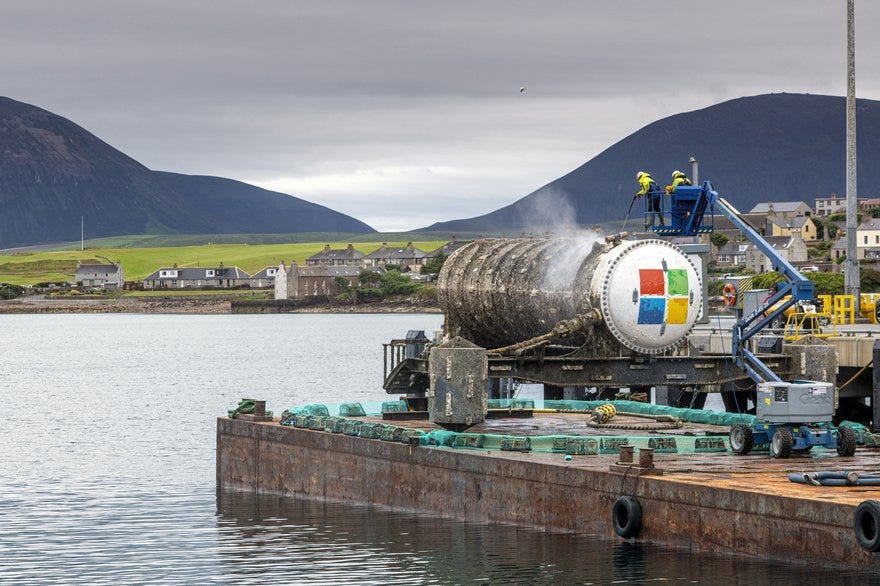
Microsoft confirms Project Natick underwater data center is no more
Update on the Recall preview feature for Copilot+ PCs
blogs.windows.com: Update: June 13, 2024: Today, we are communicating an additional update on the Recall (preview) feature for Copilot+ PCs. Recall will now shift from a preview experience broadly available for Copilot+ PCs on June 18, 2024, to a preview available first in the Windows Insider Program (WIP) in the coming weeks. Following receiving feedback on Recall from our Windows Insider Community, as we typically do, we plan to make Recall (preview) available for all Copilot+ PCs coming soon.
krebsonsecurity.com (6/11/24): [Excerpt] Patch Tuesday, June 2024 “Recall” Edition: Microsoft today released updates to fix more than 50 security vulnerabilities in Windowsand related software, a relatively light Patch Tuesday this month for Windows users. The software giant also responded to a torrent of negative feedback on a new feature of Redmond’s flagship operating system that constantly takes screenshots of whatever users are doing on their computers, saying the feature would no longer be enabled by default.
🙂
☑️ #118 Jun 13, 2024
Microsoft Chose Profit Over Security and Left U.S. Government Vulnerable to Russian Hack, Whistleblower Says
propublica.org: [Excerpt] Former employee says software giant dismissed his warnings about a critical flaw because it feared losing government business. Russian hackers later used the weakness to breach the National Nuclear Security Administration, among others.
ProPublica’s investigation adds new details and pivotal context about that culture, offering an unsettling look into how the world’s largest software provider handles the security of its own ubiquitous products. It also offers crucial insight into just how much the quest for profits can drive those security decisions, especially as tech behemoths push to dominate the newest — and most lucrative — frontiers, including the cloud market.
Assessing Microsoft Corporation’s Cybersecurity Shortfalls & the Implications for Homeland Security
🙂
☑️ #117 Jun 11, 2024
Duke Energy wants to help Big Tech buy the 24/7 clean energy it needs
canarymedia.com: [Excerpt] The utility’s new proposal would let large corporate customers fund novel technologies like long-duration storage and advanced nuclear as they try to decarbonize.
Amazon, Google, and Microsoft — all of which have goals to power their operations with clean electricity — have acknowledged that simply buying wind and solar credits isn’t enough. To authentically decarbonize their operations, they need to source enough clean energy to make it through every day and night. This principle applies to society at large: The grid won’t be rid of fossil fuels until it can get reliable, clean electricity at any time of day. The trick is figuring out how to do that in today’s electricity system.
Now mega-utility Duke Energy wants to make it happen. The power provider, which serves 8.4 million customers in the Carolinas and four other states, worked with those tech giants on a novel plan to let large corporate energy consumers purchase higher levels of clean energy than previously available, all the way up to the fabled 24/7 coverage.
investors.duke-energy.com (5/29/24): [Excerpt] Responding to growing demand, Duke Energy, Amazon, Google, Microsoft and Nucor execute agreements to accelerate clean energy options.
The proposed Accelerating Clean Energy (ACE) tariffs would enable large customers like Amazon, Google, Microsoft and Nucor to directly support carbon-free energy generation investments through innovative financing structures and contributions that address project risk to lower costs of emerging technologies. ACE tariffs would facilitate beneficial on-site generation at customer facilities, participation in load flexibility programs and investments in clean energy assets – features attractive to customers with large-scale energy needs.
The ACE framework also would include a Clean Transition Tariff (CTT) – the key feature enabling Duke Energy to provide individualized portfolios of new carbon-free energy to commercial and industrial customers. The CTT would match clean-energy generation and customer load to accelerate overall grid decarbonization. This would be a voluntary program for larger customers seeking to advance their clean energy goals, and it would include protections for non-participating customers.
Advanced nuclear: [Excerpt] In the U.S., dozens of companies are in various phases of developing small modular reactor and advanced reactor technologies. These technologies are expected to be available later this decade. Small modular reactors are cooled by water like traditional nuclear reactors. Advanced reactors are cooled by molten salt, helium gas or liquid metal. Some advanced reactors also provide thermal storage that saves energy to be used when customers need it most. Small modular reactors are one of the most promising emerging technologies capable of producing 50-300 megawatts of carbon-free energy and offering many safety, environmental and economic benefits. Advanced reactors also show promise, but they currently have more timeline uncertainty due to differences in regulatory requirements, technology maturity and fuel availability. Duke Energy plans to build advanced nuclear technologies in the 2030s and beyond to achieve net-zero carbon emissions by 2050. Nuclear power is the only carbon-free energy source that is always on and available 24 hours a day while also complementing renewables like solar and wind power.
@TerraPowerLLC: The Natrium reactor is a 345-megawatt advanced nuclear reactor coupled with a grid-scale energy storage system. It provides carbon-free energy and seamlessly integrates into power networks with high levels of renewables. The Natrium technology offers enhanced safety features, minimizes waste production, uses fuel more efficiently and lowers costs with a streamlined design.
As Windows transforms for the era of AI we are continuing to expand the reach of the platform including all the AI experiences developers create with the Windows Copilot Runtime. We are delivering Windows from the cloud with Windows 365 so apps can reach any device, anywhere. And we are introducing Windows experiences to new form factors beyond the PC.
For example, we are deepening our partnership with Meta to make Windows a first-class experience on Quest devices. And Windows can take advantage of Quest’s unique capabilities to extend Windows apps into 3D space. We call these Volumetric apps. Developers will have access to a volumetric API. This is just one of many ways to broaden your reach through the Windows ecosystem.
blogs.microsoft.com: [Excerpt] Today, at a special event on our new Microsoft campus, we introduced the world to a new category of Windows PCs designed for AI, Copilot+ PCs.
Recall instantly
We set out to solve one of the most frustrating problems we encounter daily – finding something we know we have seen before on our PC. Today, we must remember what file folder it was stored in, what website it was on, or scroll through hundreds of emails trying to find it.
Now with Recall, in preview starting June 18, you can access virtually what you have seen or done on your PC in a way that feels like having photographic memory. Copilot+ PCs organize information like we do – based on relationships and associations unique to each of our individual experiences. This helps you remember things you may have forgotten so you can find what you’re looking for quickly and intuitively by simply using the cues you remember.
Microsoft vs. Apple: Satya Nadella Says AI-Focused Copilot+ PCs Beat Macs | WSJ
🙂
☑️ #115 May 13, 2024
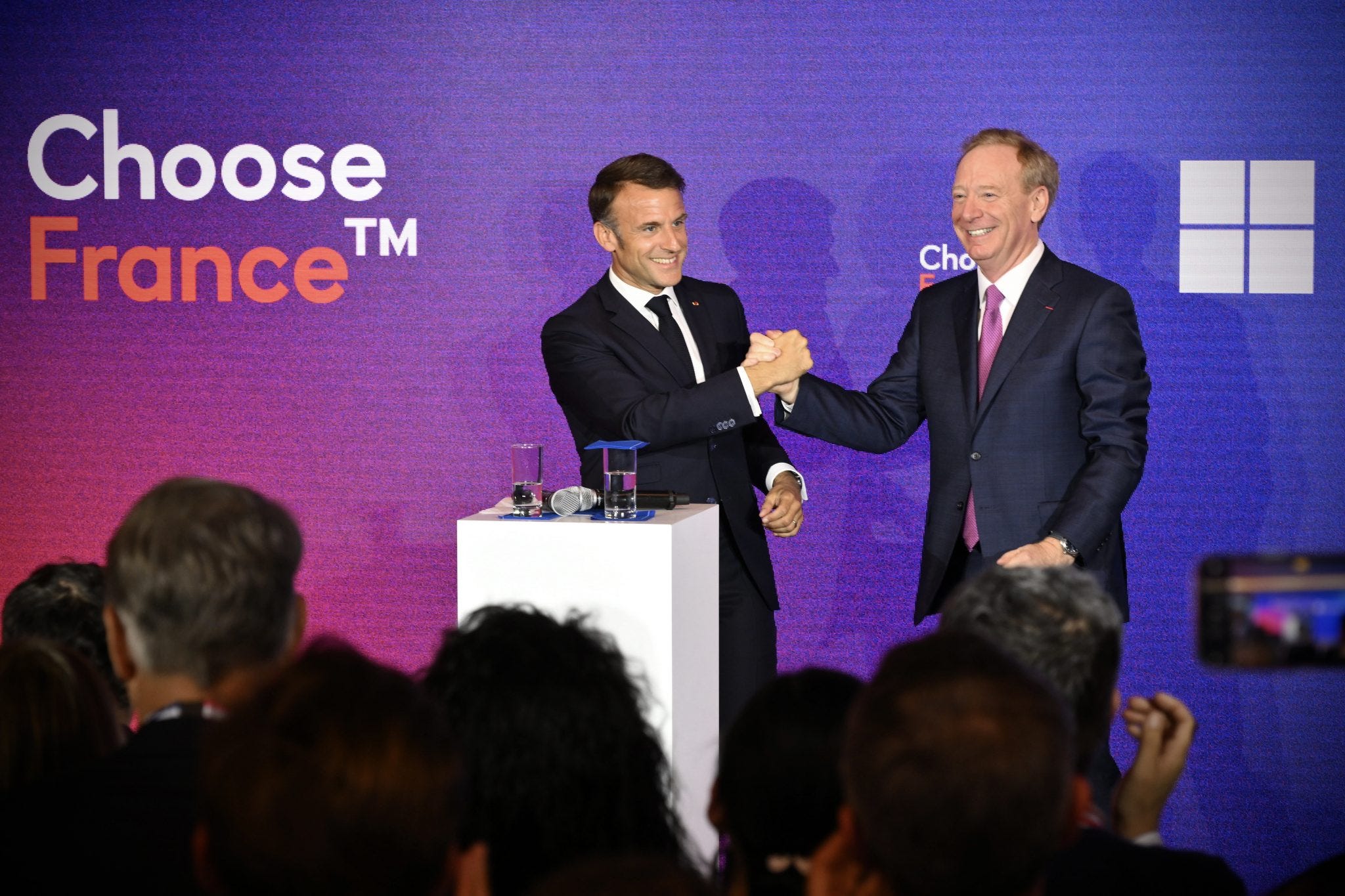
7th Choose France Summit: Amazon and Microsoft to spend billions in France
@France24_en: The 7th annual foreign investment summit known as "Choose France" kicks off at Versailles with €15 billion in new projects expected. Also in this edition, China prepares a $140 billion debt float to fund economic stimulus. Plus, hundreds of environmental activists storm Tesla's German Gigafactory.
@KimZetter: “This is the first time we’ve ever had an isolated version ... not connected to the internet.... You don’t want [the AI] to learn on the questions that you’re asking and then somehow reveal that information."
🙂
☑️ #113 May 8, 2024
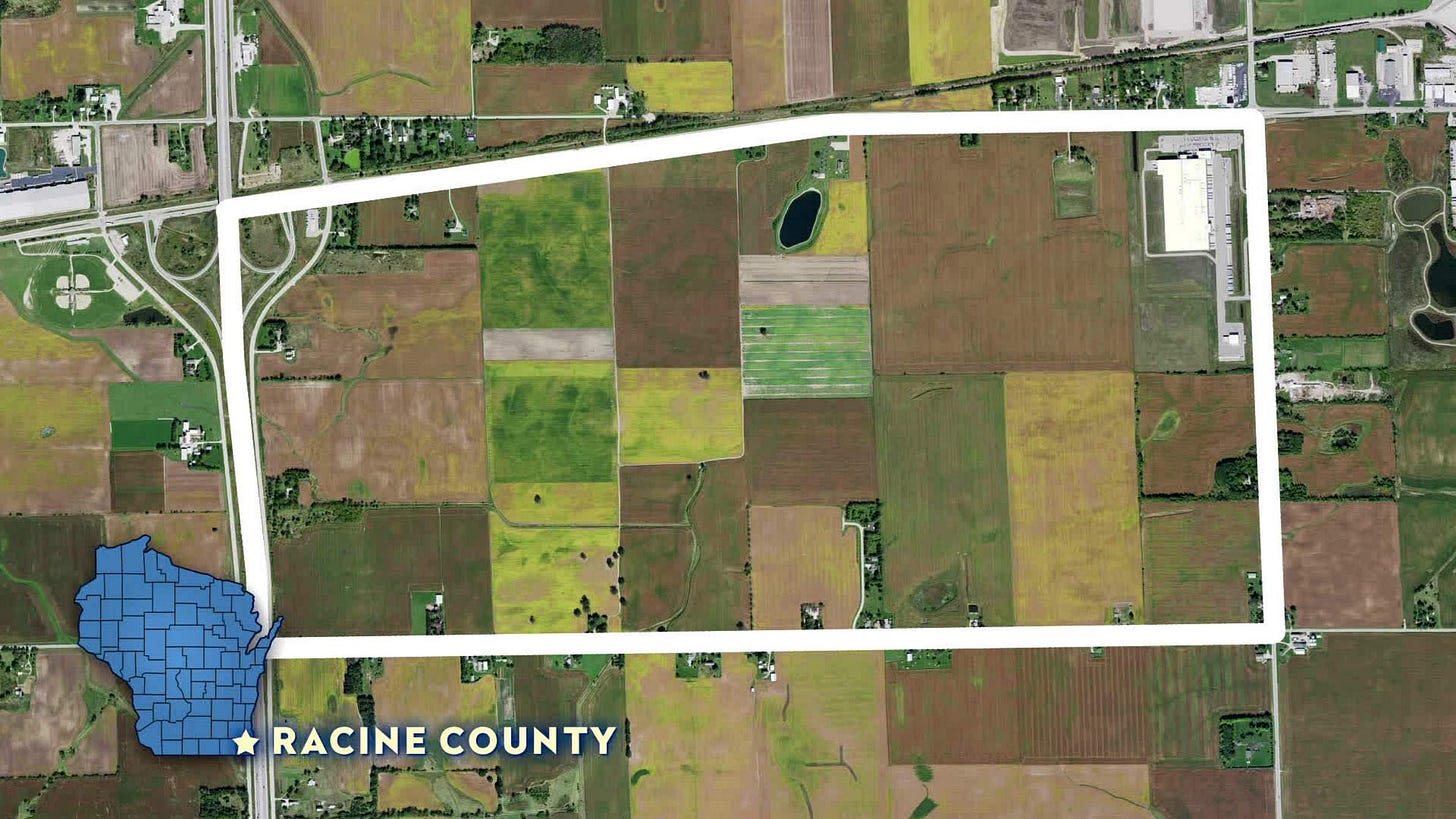
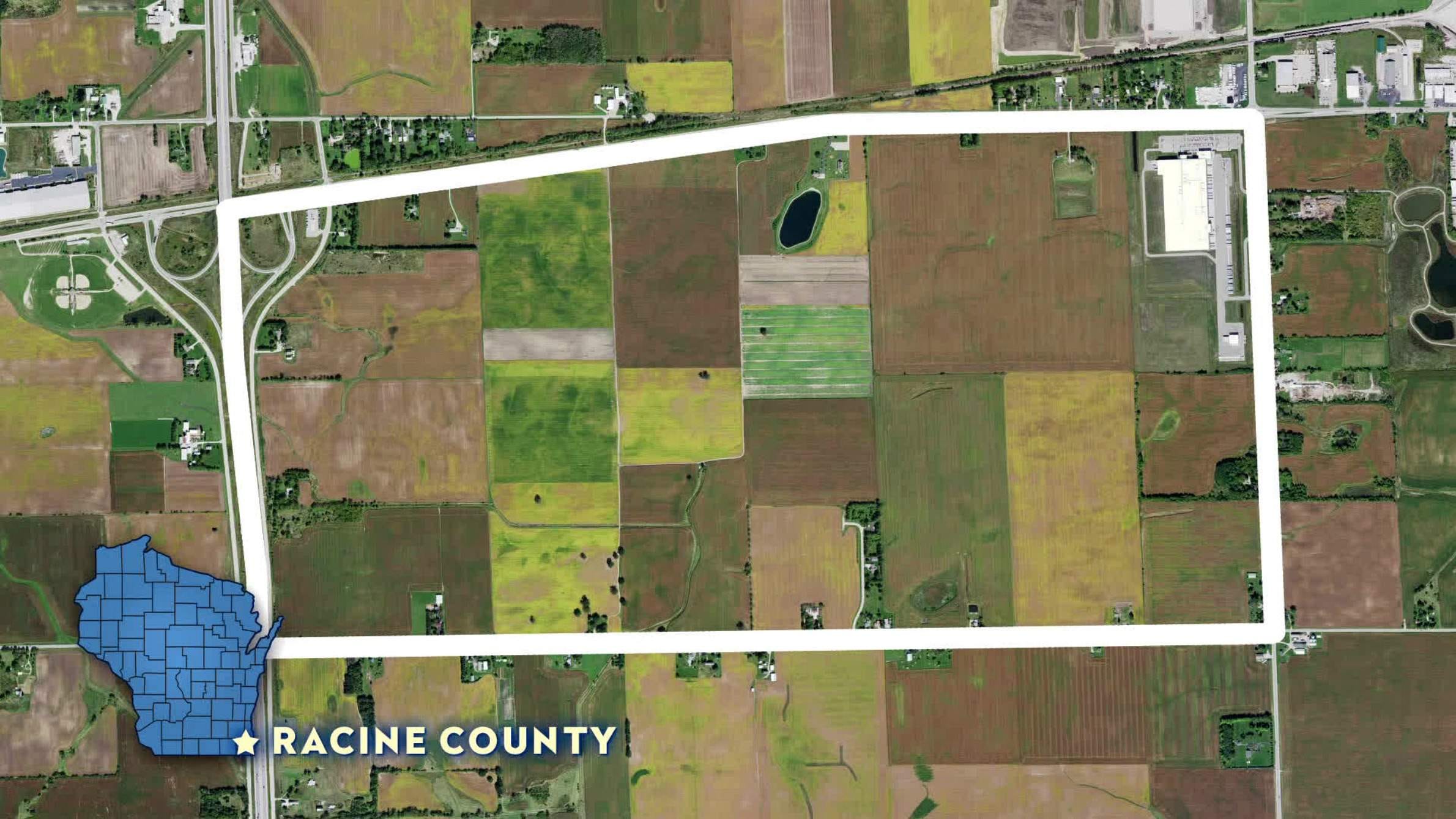
Fact Sheet: President Biden to Highlight $3.3 Billion Investment in Racine, Wisconsin, and How His Investing in America Agenda is Driving Economic Comebacks in Communities Across the Country
whitehouse.gov: [Transcription] [Excerpt] Six years ago, the prior administration touted a $10 billion investment by Foxconn that never materialized – now Microsoft will build a new AI datacenter on the same land, powering industries of the future in Wisconsin.
Silicon Valley finds its silver bullet in a desperate race for energy
telegraph.co.uk: [Transcription] [Excerpt] Tech giants bet on a nuclear revival to power the supercomputer revolution.
The almost-limitless piles of cash AI companies have to spend helps. OpenAI and its major investor Microsoft are reportedly developing plans for the world’s biggest supercomputer, a $100bn (£79.66bn) project codenamed Stargate. Analysts at Morgan Stanley speculated last week that this would be powered by several nuclear plants.
Microsoft’s AI Copilot is beginning to automate the coding industry
bloomberg.com: Along the way, Copilot is gradually revolutionizing the working lives of software engineers—the first professional cohort to use generative AI en masse. Microsoft says Copilot has attracted 1.3 million customers so far, including 50,000 businesses ranging from small startups to corporations like Goldman Sachs, Ford and Ernst & Young. Engineers say Copilot saves them hundreds of hours a month by handling tedious and repetitive tasks, affording them time to focus on knottier challenges.
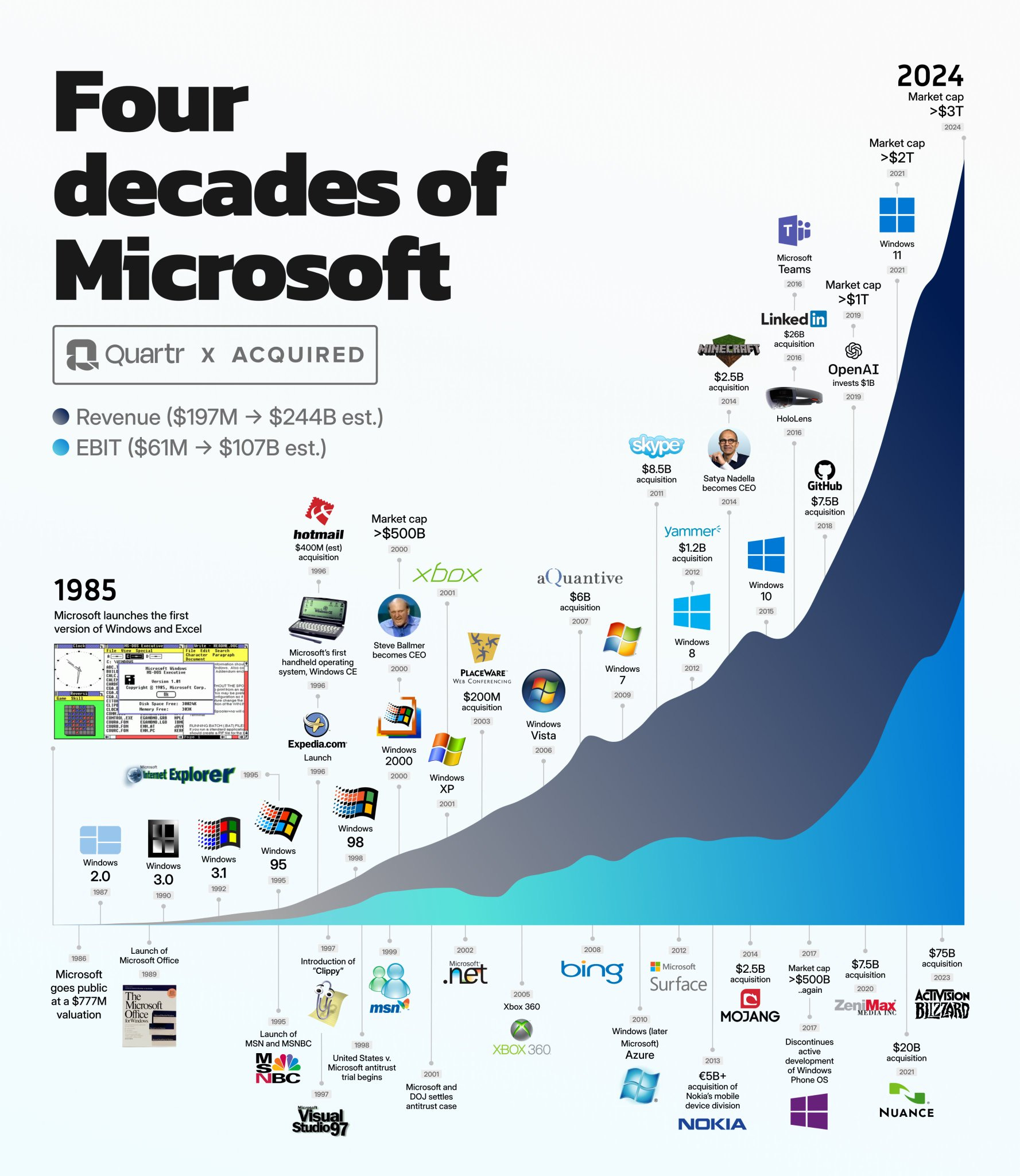
This week's cover story is a deep dive into $MSFT's journey to becoming the highest-valued company globally. Below is a sneak peek, illustrating four decades of Microsoft in one visual.
Join the Edge community now to secure your issue via our profile.
CMA seeks views on AI partnerships and other arrangements
gov.uk: [Transcription] [Excerpt] Invitation to comment launched by the CMA on the partnerships between Microsoft and Mistral AI, and Amazon and Anthropic, and Microsoft’s hiring of former employees and related arrangements with Inflection AI.
@BusinessInsider: Microsoft has a target to amass 1.8 million AI chips by the end of the year, internal document shows
Approximately $100 billion would be allocated for GPUs and data centers from 2024 up until 2027.
🙂
☑️ #104 Apr 16, 2024
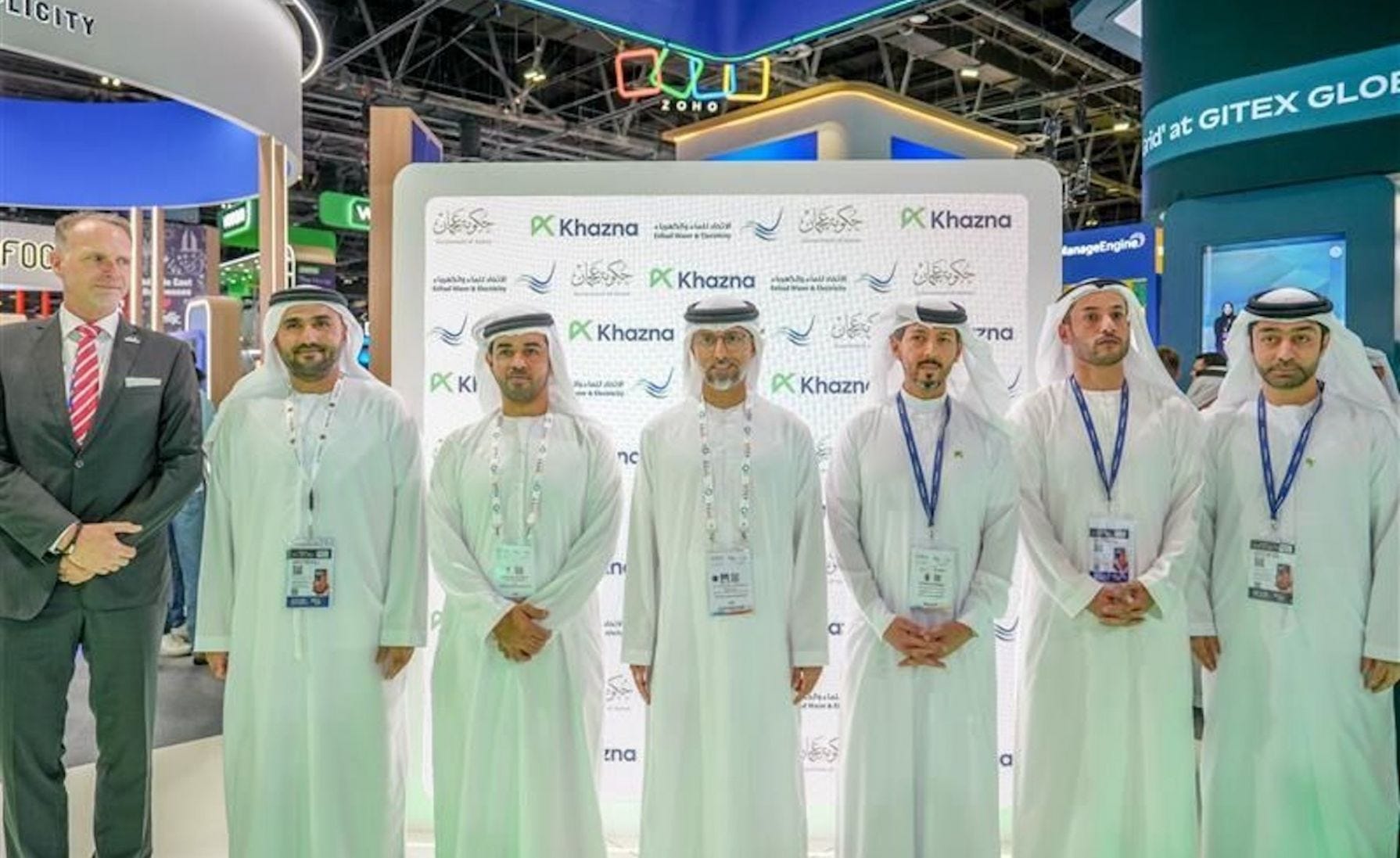
Microsoft Invests $1.5 Billion in Abu Dhabi’s G42 to Accelerate AI Development and Global Expansion
g42.a: [Transcription] [Excerpt] This strategic investment will enhance the UAE’s position as a global AI hub and provide further opportunities for partners and customers to innovate and grow.
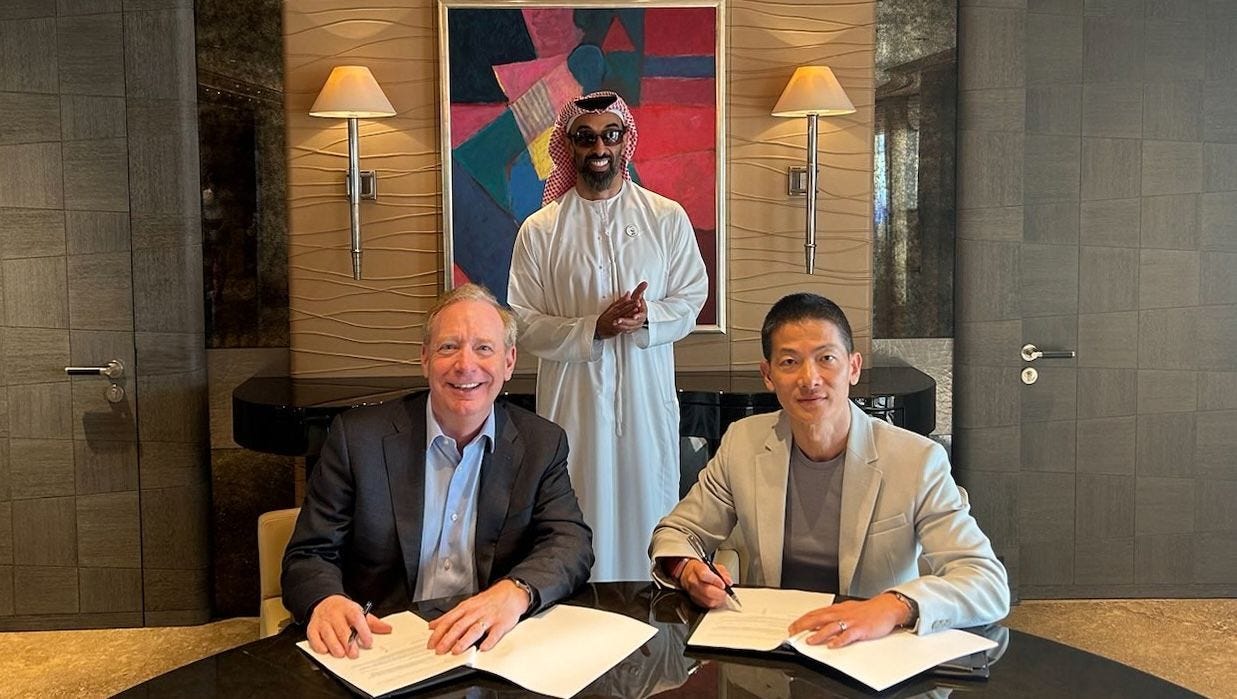
G42, the leading UAE-based artificial intelligence (AI) technology holding company, and Microsoft today announced a $1.5 billion strategic investment by Microsoft in G42. The investment will strengthen the two companies’ collaboration on bringing the latest Microsoft AI technologies and skilling initiatives to the UAE and other countries around the world. As part of this expanded partnership Brad Smith, Vice Chair and President of Microsoft, will join the G42 Board of Directors.
cisa.gov: [Transcription] [Excerpt] CISA Issues Emergency Directive 24-02: Mitigating the Significant Risk from Nation-State Compromise of Microsoft Corporate Email System.
news.microsoft.com: [Transcription] [Excerpt] Microsoft to invest US$2.9 billion in AI and cloud infrastructure in Japan while boosting the nation’s skills, research and cybersecurity.
Washington D.C., April 9 ET, 2024 – Today, Microsoft announced it will invest US$2.9 billion over the next two years to increase its hyperscale cloud computing and AI infrastructure in Japan. It will also expand its digital skilling programs with the goal of providing AI skilling to more than 3 million people over the next three years, open its first Microsoft Research Asia lab in Japan, and deepen its cybersecurity collaboration with the Government of Japan.
Expanding Japan’s AI and cloud infrastructure capacity
Building Japan’s AI capability by training 3 million people
Opening Japan’s first Microsoft Research Asia lab in Tokyo
Partnering to strengthen Japan’s cybersecurity defenses
blogs.microsoft.com: [Transcription] [Excerpt] The Microsoft AI London hub adds to Microsoft’s existing presence in the U.K., including the Microsoft Research Cambridge lab, home to some of the foremost researchers in the areas of AI, cloud and productivity. At the same time, it builds off Microsoft’s recently announced £2.5 billion investment to upskill the U.K. workforce for the AI era and to build the infrastructure to power the AI economy, including our commitment to bring 20,000 of the most advanced GPUs to the country by 2026.